Orion Magazine is an ad-free, literary magazine that digs beneath and addresses the environmental issues of the day, while trying to bring us back to an awareness of place. At Orion you'll find authors and activists like Bill McKibben and Derrick Jensen laying out startling evidence of environmental degradation as well as corrective courses of action, and you'll find contributing editors like poet Wendell Berry and novelist Barbara Kingsolver, touching on the spiritual connection we have with our earth, and so, our concomitant responsibility for true stewardship. Perhaps you've gathered that I'm an avid fan of Orion.
Last year I discovered that the magazine sponsored a writer's workshop: one week at historic Sterling College in Vermont, with 30 other writers from across North America, two editors from Orion, and three authors/teachers. Writers are selected on the basis of an essay and a cover letter. My application was successful. I was informed of this on April 1, so of course I double checked the validity of the correspondence.
I elected to study under poet Alison Deming Hawthorne (Nathaniel Hawthorne's great-great-granddaughter). To receive finely articulated critique as well as credit from her, was, you'll understand, a highlight. In all, an idyllic week.
There's a problem with this of course. As we all know, after coming back from a rewarding conference or workshop, the reality of the blank page seems twice as daunting. But we also know that something has been added.
The Wildbranch Writing experience encouraged me to step out and apply myself in the face of what I may think are insurmountable odds. It has given me some confidence that I can write, but it has also helped me experiment with style and form, voice and method, which in turn has helped focus my writing, find my place.
My encouragement then is simple: that retreat, workshop, writer's circle, course, you always wanted to take or try...well, give it a (another) shot.
growmercy.org

InScribe Writers Online Blog - Where members share their writings with each other and the world
Showing posts with label Stephen T. Berg. Show all posts
Showing posts with label Stephen T. Berg. Show all posts
September 11, 2012

April 11, 2012
Framing Hiroshima within Easter–Stephen T. Berg
(As this is a longer post I’ve split it to keep within guidelines. If you wish to read the entire piece there is a link at the bottom of the post.)
I am at the Peace Memorial Museum in Hiroshima, it is Passion week, Easter has closed in.
I am in front of an exhibit. Behind glass upon a circular stand is what looks to be scraps of cracked wax. Below I read about the mother who saved the melted skin of her nine year old son, the skin to show the father, a soldier, who is away still fighting, not knowing everything is lost. The mother, shielded from the original blast will soon die of "A-bomb disease."

I see a photograph, a boy standing, arms held out as if feeling his way, sheets of skin hanging off muscle like Spanish moss.
I read of a woman on a street car who watches people on the street. She sees small fires start at the tips of fingers, then she sees the fires spread and cover bodies.
I read about a girl who was making 1000 paper cranes which will grant her wish to live. She dies of leukemia ten years after the bomb. She made 644 paper cranes.
There are 140,000 other stories.
How do you place Hiroshima within Easter? Easter within Hiroshima? With what perspective do you frame 140,000 crucifixions? Is it not reasonable here to see Easter as a joke?
On behalf of the Allies, President Truman thanked God that this "awful (atomic) power has come to us and not to the enemy." Hiroshima was still burning, Nagasaki to come, when he prayed that God, "may guide us to use it in His ways and for His purpose."
I am looking at a tricycle. Another exhibit. It has slumped from the heat that arrived immediately after detonation. I'm in deep here, hanging on to Easter in the middle of Hiroshima.
All my received Sunday answers fail, all the ones I repeated to my children: Easter: the settling of a payment for sins—a human/divine sacrifice required by a righteous God—us just off-stage knowing everything turns out all right at the end. Easter: the right to eternal life for believing the right thing—a new fraternity reserved for those who believe in the one way—the knowledge that after death heaven awaits the steadfast and upright, while in the mean time, we are given a pass to go on playing by the code of lesser evils, the miserable dictates of death, the rules of reprisal and sacrificial violence.
What is Hiroshima except a barely imaginable spectacle of the game of death? With us thanking God that it fell to us to be able to play deadlier than our enemy. The grizzly victory gained, in the name of God.
But what is Easter except Jesus voluntarily stepping into the toxicity of all our deadly ways of securing our lives? And what is the resurrection but an end to the game of death?

Go here to read the rest of the post.
I am at the Peace Memorial Museum in Hiroshima, it is Passion week, Easter has closed in.
I am in front of an exhibit. Behind glass upon a circular stand is what looks to be scraps of cracked wax. Below I read about the mother who saved the melted skin of her nine year old son, the skin to show the father, a soldier, who is away still fighting, not knowing everything is lost. The mother, shielded from the original blast will soon die of "A-bomb disease."

I see a photograph, a boy standing, arms held out as if feeling his way, sheets of skin hanging off muscle like Spanish moss.
I read of a woman on a street car who watches people on the street. She sees small fires start at the tips of fingers, then she sees the fires spread and cover bodies.
I read about a girl who was making 1000 paper cranes which will grant her wish to live. She dies of leukemia ten years after the bomb. She made 644 paper cranes.
There are 140,000 other stories.
How do you place Hiroshima within Easter? Easter within Hiroshima? With what perspective do you frame 140,000 crucifixions? Is it not reasonable here to see Easter as a joke?
On behalf of the Allies, President Truman thanked God that this "awful (atomic) power has come to us and not to the enemy." Hiroshima was still burning, Nagasaki to come, when he prayed that God, "may guide us to use it in His ways and for His purpose."
I am looking at a tricycle. Another exhibit. It has slumped from the heat that arrived immediately after detonation. I'm in deep here, hanging on to Easter in the middle of Hiroshima.

All my received Sunday answers fail, all the ones I repeated to my children: Easter: the settling of a payment for sins—a human/divine sacrifice required by a righteous God—us just off-stage knowing everything turns out all right at the end. Easter: the right to eternal life for believing the right thing—a new fraternity reserved for those who believe in the one way—the knowledge that after death heaven awaits the steadfast and upright, while in the mean time, we are given a pass to go on playing by the code of lesser evils, the miserable dictates of death, the rules of reprisal and sacrificial violence.
What is Hiroshima except a barely imaginable spectacle of the game of death? With us thanking God that it fell to us to be able to play deadlier than our enemy. The grizzly victory gained, in the name of God.
But what is Easter except Jesus voluntarily stepping into the toxicity of all our deadly ways of securing our lives? And what is the resurrection but an end to the game of death?

Go here to read the rest of the post.
February 11, 2012
Listening – Stephen T. Berg

Some of the gulls launch themselves. These, moving above the trees, find a current and now the air becomes still beside them as they ride. They glide with grace; follow a silent score; invent as they go.
Within the leaden racket of my culture, having been candle-dipped in noise, I too am comfortable with distraction and petty spitting contests. And I hardly notice my adoption of slogans and my own bilious secretions—my cranky adjuvant for the crowd.
But should I find a way to remove myself and let things fall silent, I will enter an inscape, a dark vacuum.
At first, the break from stimuli and the cessation of group-think brings a low-grade panic. And so—as when I was a child cautiously climbing the stairs out of a dark basement, knowing that if I broke into a run something would grab my ankle through the rungs—I move with deliberation to turn something on, to thumb a glossy page, to plug in, to avoid the void.
But the Benedictine vow of listening asks me to simply listen, and listen simply. Now, should I have it in me to listen like this—with my heart’s ear—I may yet feel a breeze of deliverance, a buoyancy, a moment of rising above the grey wall of cultural clapperclaw.
And here, one may hear the deep transcendence a single note—“come and see”—of catching an updraft and gliding in harmony with other notes.
--
I wrote the above meditation a few years ago, some time after I became a Benedictine Oblate.
Listening has always been hard for me, whether in prayer or (staying) in the present; and the daily discipline of this vow, Auscultare, or listening with the ear of the heart, was something of a necessary God-send.
I have an idea that for we writers, listening is job-one—long before the appearance of that first word. When I sense myself running out of ideas, when I feel my prose is purple and my poetry stale, I know I haven’t been listening.
www.growmercy.org
December 11, 2011
Advent-ageous – Stephen T Berg
 It's early and dark. In the south-east there is a place were the sun will come up, should it choose. Indications are good. So I wait for the first signs of brightening behind the city-scape. I wait.
Winter waits. The soil of summer-fallow waits, bulbs wait, bamboo is excellent at waiting, geese wait until the time is right. Beavers don't abide waiting, but orb weavers don't seem to mind. They spin and wait as long as it takes. The earth spins too, waiting its equinox.
But light bulbs, street lights, clocks, little chips in computers, never wait and will never care to wait. And we use them and anything else we can think of to train the waiting out of our lives.
The world of industry is bringing waiting to an end. Industry and commerce keep company with the future. Corporations race each other to see how far they can project themselves into the future, or how much of it they can drag into the present, which destroys both.
There is madness here that we've normalized. Because life, our second womb, is about waiting. Waiting, not like Estrogon and Vladimir (remember?), but waiting without excessive effort in acceptance of a serial now. Impatience has nothing to do with waiting.
Advent is the season of specific expectation. It’s a rendezvous and tea with a knowing midwife. A time for rekindled waiting—should we see to turn this to our soul’s advancement.
And in Advent, we wait in a commemorative way, for the birth of Jesus. As people of the paschal mystery we are always anticipating some kind of birth and some kind of resurrection, in the knowledge that there was a birth and that the son has risen. We wait as one waits for dawn.
I can't see it yet but soon east will grow orange. Behind the berm of buildings across the North Saskatchewan high on the bank, the trees will turn skeletal as light strengthens behind them.
www.growmercy.org
November 11, 2011
Writing and incarnational discovery–Stephen T Berg
We live in a violent world. That's hardly a secret. We have been formed by a culture of war and violence, the nature of which we often keep wilfully hidden from ourselves. But today, we intentionally remember war, so that we can in some way dispel it, so that at least violence of a global scale, can be named and thwarted. And we hope that in the naming, in the remembering, something like grace and peace may appear.
And yet, as Flannery O'Connor has said, "Our age not only does not have a very sharp eye for the almost imperceptible intrusions of grace, it no longer has much feeling for the nature of the violences which precede and follow them." And so in O'Connor's fiction, violence and the grotesque act as the cudgel to awaken the sleeping (that's us) to the reality of something like an intrusion of grace.
Of course violence is never the cause of grace, but it can, in its great distortions of social solidarity and communal life, reflect back to us our own propensity toward envy and rivalry, and in this uncovering, perhaps allow us the grace of seeing ourselves as we truly are—which is, if it happens, an occasion of mercy.
A writerly goal I repeatedly come short of, which is never less a goal, is to stay awake to those intrusions of grace and occasions of mercy, and so perhaps to seize them. For as long as there is language, as Bonny Way and Kathleen Gibson have outlined below, there is a desire to get at that meaning through honest reflection and a need to communicate it clearly. And the closer we can come to the nub and nut of things through true communication, the more set in relief grace becomes. And the closer the personal reflection, the more universal the meaning. For that, after all, is the nature of our Incarnate world, which the nature of violence attempts to usurp.
I have a notion that as Christian writers, writing for this kind of—if I can call it—Incarnational discovery, is at the bottom of most of our goals. For if it isn't, I suppose we're simply adding to the heap of informative tracts and very little to the meaning of things.
Of course as lofty or flighty as this sounds, it's only through the "habit of art," (Maritain) that we come to apprehend and then relay these meanings. For as we writers sit down to write out some vague and fleeting idea, we are immediately thrown into the practical question of form. And its through the daily habit of wrestling with this most basic aspect of writing where a discovery is made, a true thing found.
And as O'Connor has said somewhere, writers ought to be able to discover something from their writing, if not, there's little chance the reader will.
www.growmercy.org
And yet, as Flannery O'Connor has said, "Our age not only does not have a very sharp eye for the almost imperceptible intrusions of grace, it no longer has much feeling for the nature of the violences which precede and follow them." And so in O'Connor's fiction, violence and the grotesque act as the cudgel to awaken the sleeping (that's us) to the reality of something like an intrusion of grace.
Of course violence is never the cause of grace, but it can, in its great distortions of social solidarity and communal life, reflect back to us our own propensity toward envy and rivalry, and in this uncovering, perhaps allow us the grace of seeing ourselves as we truly are—which is, if it happens, an occasion of mercy.
A writerly goal I repeatedly come short of, which is never less a goal, is to stay awake to those intrusions of grace and occasions of mercy, and so perhaps to seize them. For as long as there is language, as Bonny Way and Kathleen Gibson have outlined below, there is a desire to get at that meaning through honest reflection and a need to communicate it clearly. And the closer we can come to the nub and nut of things through true communication, the more set in relief grace becomes. And the closer the personal reflection, the more universal the meaning. For that, after all, is the nature of our Incarnate world, which the nature of violence attempts to usurp.
I have a notion that as Christian writers, writing for this kind of—if I can call it—Incarnational discovery, is at the bottom of most of our goals. For if it isn't, I suppose we're simply adding to the heap of informative tracts and very little to the meaning of things.
Of course as lofty or flighty as this sounds, it's only through the "habit of art," (Maritain) that we come to apprehend and then relay these meanings. For as we writers sit down to write out some vague and fleeting idea, we are immediately thrown into the practical question of form. And its through the daily habit of wrestling with this most basic aspect of writing where a discovery is made, a true thing found.
And as O'Connor has said somewhere, writers ought to be able to discover something from their writing, if not, there's little chance the reader will.
www.growmercy.org
October 11, 2011
The Editor – Stephen Berg
Above the spruce, pitched wings work the air
like the agitator of a washing machine.
Raven lands heavy
and the falling branch of an old poplar
clatters down like the hooves of a moose.
I see her cutout form,
black tabs hold her to a bare branch.
She's a hole in the evening sky.
A chill is at the small of my back,
My forehead is damp.
I pull on my Corona, feel the heat on my lips,
find mettle and speak.
Her head rolls down and snaps to the side
and she handcuffs me with one eye.
I am regarded. Then addressed:
Do you know the small brown bats have left?
They've dropped free from their upside down cells
to dart at a few remaining stork flies,
and have flown at that horizon behind you.
They will not be back soon.
Do you know of the moose that will be hit by a truck
tonight on highway 37?
She lies dead in your ditch by a barbed fence.
A calf, hidden by willow is watching.
Do you know my sisters who tear hide from rib?
They gorge without malice, without thanksgiving,
with only the terrible intelligence of hunger,
leaving the calf to run through jack pines and swamp
to plunge her muzzle beneath the algae and lilies
and meet the forgiving calm of a thousand water-striders
above, like a benediction.
The calf will go on.
Have you seen the stores of snow above my head?
Will you keep your face to the north wind?
Do you know the promise of the night's pale light,
how it whets my wings?
Have you heard the millions of prayers
in the trembling telegraph of bats' wings?
You would do well to wait through a winter for their return.
Spend your nights letting your eyes drop free from their cells.
In spring you will note their coming
by the bend in a blade of grass.
At least do this: Tether yourself to an antler
and go for a life-saving gallop down a cut-line.
Flood your dry vessels with blood,
then stand silent as smoke and burst into flame.
You who sit on a stump with your bits of paper,
go storm the gates of God’s kingdom—
then go and publish your mind.
www.growmercy.org

like the agitator of a washing machine.
Raven lands heavy
and the falling branch of an old poplar
clatters down like the hooves of a moose.
I see her cutout form,
black tabs hold her to a bare branch.
She's a hole in the evening sky.
A chill is at the small of my back,
My forehead is damp.
I pull on my Corona, feel the heat on my lips,
find mettle and speak.
Her head rolls down and snaps to the side
and she handcuffs me with one eye.
I am regarded. Then addressed:
Do you know the small brown bats have left?
They've dropped free from their upside down cells
to dart at a few remaining stork flies,
and have flown at that horizon behind you.
They will not be back soon.
Do you know of the moose that will be hit by a truck
tonight on highway 37?
She lies dead in your ditch by a barbed fence.
A calf, hidden by willow is watching.
Do you know my sisters who tear hide from rib?
They gorge without malice, without thanksgiving,
with only the terrible intelligence of hunger,
leaving the calf to run through jack pines and swamp
to plunge her muzzle beneath the algae and lilies
and meet the forgiving calm of a thousand water-striders
above, like a benediction.
The calf will go on.
Have you seen the stores of snow above my head?
Will you keep your face to the north wind?
Do you know the promise of the night's pale light,
how it whets my wings?
Have you heard the millions of prayers
in the trembling telegraph of bats' wings?
You would do well to wait through a winter for their return.
Spend your nights letting your eyes drop free from their cells.
In spring you will note their coming
by the bend in a blade of grass.
At least do this: Tether yourself to an antler
and go for a life-saving gallop down a cut-line.
Flood your dry vessels with blood,
then stand silent as smoke and burst into flame.
You who sit on a stump with your bits of paper,
go storm the gates of God’s kingdom—
then go and publish your mind.
www.growmercy.org
September 11, 2011
Descending dew and a 10th Anniversary 9-11 reflection – Stephen Berg
On this day 10 years ago, as the anchors say, "everything changed." And for the families of those that were killed, for the relatives of the grieving thousands, for all those who were somehow closely tied to the horror of that day, everything did change.
But beyond this, very little has changed. Normal has simply gotten worse. Fear is still ratcheted up; security is still and ever our god, as trust erodes; and violence in all its forms is further entrenched, even as its effectiveness steadily vanishes.
To believe that everything has changed is to ignore the ubiquity of our old disease and its symptoms, there for all to see. To believe that everything has changed, that 9-11 somehow exposed our nationalistic innocence and vulnerability is just another way the age-old lie of sacrificial violence is maintained.
Think back to the ensuing days of 9-11. Were we not all caught up? Suddenly we were all patriots. A phrase that echoed through the western world's networks was, "We are all Americans now." And suddenly the churches were full—most every church flying an American flag. A spontaneous and unholy impression of unanimity. With our kinship and goodness rediscovered, suddenly we were seeking a target for our justified outrage. No questioning the declaration of vengeance issued by the American president from behind a church pulpit. No reflection beyond retaliation, only a question of how soon.
In this kind of collective unrest blame finds its target; the target's guilt obvious by virtue of it being targeted, and so excluded; and the death and destruction of distant neighbourhoods or nations, neatly justified.
Can words descend like dew in this confusion? Can artists, poets, and writers of faith put flesh on the bleaching bones of peace and liberation?
This is a time for the dew of gospel words to descend. A time like so many other times. And yet, a heightened and urgent time, if only for the stark and burgeoning fact that there are no other solutions than mercy and nonviolence. Modelled and lived out by Jesus.
The way of mercy and nonviolence is all we have left. It was only and always what we had left, but we were taken in by the lie of sacrificial violence, co-opted by a culture based on death. If not growing mercy, and precipitous nonviolence, as remote as this appears, what remains, is apocalyptic violence—the escalation to extreme forms of reciprocal reprisals.
Yet, in the midst of this long shot are outbreaks of truth and compassion, humanizing moments, emerging groups of non-possessed people. Who is this happening to? Why is this happening? What are their stories?
Words descending like dew is a providential theme for Inscribe’s conference; perhaps even an imperative theme past our understanding. Shall we apply ourselves to this theme? And to our time; to relay the beauty of the one story through the sharing of our stories, told, shown like the descending dew.
August 11, 2011
Time of salmon – Stephen T Berg
As, no doubt, many of you, I occasionally like to take a single verse and write a kind of meditation/reflection. Just to see where it goes:

Behold, thou hast made my days as an handbreadth; and mine age is as nothing before thee: verily every man at his best state is altogether vanity (Psalm 39.5 KJV).

From a wooden bridge I watch coho and chinook jump in the Capilano river.
First there is a black line deep in the clear green water,
then a quick-rising cylinder of silver breaks the surface
—a brief arch of twisting energy—
then a slipping under, and with three quick flits of caudal fin,
back to a black outline leaving only a white foam of memory on the water.
First there is a black line deep in the clear green water,
then a quick-rising cylinder of silver breaks the surface
—a brief arch of twisting energy—
then a slipping under, and with three quick flits of caudal fin,
back to a black outline leaving only a white foam of memory on the water.
These green waters under the yellow spruce and red cedar,
stippled by salmon making their last hard run upriver,
are older than the hemlock and fir,
older than the angular face of the granite below.
stippled by salmon making their last hard run upriver,
are older than the hemlock and fir,
older than the angular face of the granite below.
This day is like the flash of a breaching salmon.
My best state, like speckled foam on the water.
And all my days together are a handbreadth.
My best state, like speckled foam on the water.
And all my days together are a handbreadth.
From this height I see my reflection,
variegated, fluid, and drawn down stream.
I am part river. My cells are full of clear green water.
I am also part Sitka and lovely amabilis fir.
And I am the banana slug and pika, the brown creeper and chum,
I am the trail the burrow the branch the runnel.
Should I decry the brevity of this life? Does the salmon?
variegated, fluid, and drawn down stream.
I am part river. My cells are full of clear green water.
I am also part Sitka and lovely amabilis fir.
And I am the banana slug and pika, the brown creeper and chum,
I am the trail the burrow the branch the runnel.
Should I decry the brevity of this life? Does the salmon?
June 11, 2011
Farewell Wildbranch–Stephen Berg
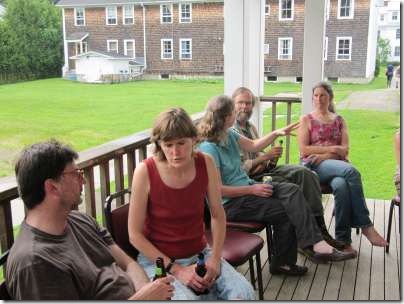
(I just completed a week-long writing workshop in Craftsbury, Vermont, sponsored by Orion magazine. I was very excited to have been accepted…but now it’s over.)
It's possible to describe this moment as a howl, a gut-yell that wakes a day-owl—and awakens me to a road ahead where my air is de-reified. So as I coast away from Craftsbury Common, I howl a farewell—reality being wild and religious.
 I arrived in the mist, have left in rain. All the days in between, as rapturous as Wordsworth and semi-wild as Frost. For of course Vermont is rapturous, and just wild enough to attract the poets; but not so wild as to make us insecure. A rhapsodic footing that sets us up to write creeds—canons of Edenic return.
And so I write: These old trees, maple and ash and hemlock, have their root-hands deep in the moraine. They keep lifting it up in places, religiously, like charismatic worship in an outdoor church. And so on.
But all the broad leaves push up against my ribs like rain swollen wood against a door jam, deciduously pile up over my head like a reasoned sermon without a revelation.
Vermont has rolled it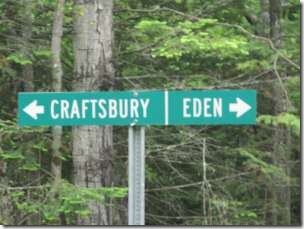 self out under my clothes, but I couldn't go naked here. I've been appeared to pastorally but I haven't been penetrated. That's the way with places. To know this place, I'd have to have been squeezed though the birth canal of a yellow beech, dropped into a pond, grown feet and roamed the understory. So it's funny that I think I know this space.
Prairie is what breaks my heart and so I avoid it, but know it's my place. (Is it normal to know you belong somewhere else but not want to be there?) I was birthed in the prairie: I was flooded out of a gopher hole by a farmer with a 45 gallon barrel, a hose, and a .22. I squirted out, just beyond range, raced along a Euclidean barbwire fence until I reached the next province, tunnelled under the border, as if prairie borders matter, and scrambled to where mountains are still unseen but heard of. It's called Parkland, which is a bothersome name, bespeaking nature's equipoise and hygiene.
Growing up on the prairie my eyes got used to seeing distance. Today I live in the inner-city and when I raise the Venetians I see a wall of cinder-block across the alley. My gaze has now gotten used to the scrub poplar, long grass and dry-air horizon inside me. My inscape—nothing grand, nothing like Hopkins—just an inner-space that's windy and open as a falling down barn.
But perhaps if you burrow down in any place, like a ground squirrel, further, like the taproot of a middle-aged hemlock, you meet souls like yourself. And if you're brave and keep going like Jules Verne and go to the core, what drama, what molten affinity. Maybe that's where my howl comes from; that depth, that stark beauty, where everything is out of place, beyond place, and undiscoverable. Unknowable as another heart.
I'm on the road to Hardwick. The lake I'm thinking about, the one we could glimpse from the Maple Leaf Farm on our last Friday has a name. But I'm not interested in knowing it. I know it's there high in the hills, out of sight, achingly clear and serene. One tear held in the nasolacrimal duct of Vermont, unshed.
I think of Wildbranch and all the writers I've met and have heard. So many beautiful attempts to name place, and each attempt, brilliantly achieved. But we know, don’t we? that in the eyes of the black-hot core of this earth, they all fail.
For me, in my attempt to use what’s given and tunnel into mystery, my great discovery is an ever-recurring one: As old as I am, I'm spit-into-the-wind naïve.
(Thank you Wildbranch and Orion magazine, for a sterling week!)
It's possible to describe this moment as a howl, a gut-yell that wakes a day-owl—and awakens me to a road ahead where my air is de-reified. So as I coast away from Craftsbury Common, I howl a farewell—reality being wild and religious.
 I arrived in the mist, have left in rain. All the days in between, as rapturous as Wordsworth and semi-wild as Frost. For of course Vermont is rapturous, and just wild enough to attract the poets; but not so wild as to make us insecure. A rhapsodic footing that sets us up to write creeds—canons of Edenic return.
 And so I write: These old trees, maple and ash and hemlock, have their root-hands deep in the moraine. They keep lifting it up in places, religiously, like charismatic worship in an outdoor church. And so on.
But all the broad leaves push up against my ribs like rain swollen wood against a door jam, deciduously pile up over my head like a reasoned sermon without a revelation.
Vermont has rolled it
 self out under my clothes, but I couldn't go naked here. I've been appeared to pastorally but I haven't been penetrated. That's the way with places. To know this place, I'd have to have been squeezed though the birth canal of a yellow beech, dropped into a pond, grown feet and roamed the understory. So it's funny that I think I know this space.
 Prairie is what breaks my heart and so I avoid it, but know it's my place. (Is it normal to know you belong somewhere else but not want to be there?) I was birthed in the prairie: I was flooded out of a gopher hole by a farmer with a 45 gallon barrel, a hose, and a .22. I squirted out, just beyond range, raced along a Euclidean barbwire fence until I reached the next province, tunnelled under the border, as if prairie borders matter, and scrambled to where mountains are still unseen but heard of. It's called Parkland, which is a bothersome name, bespeaking nature's equipoise and hygiene.
Growing up on the prairie my eyes got used to seeing distance. Today I live in the inner-city and when I raise the Venetians I see a wall of cinder-block across the alley. My gaze has now gotten used to the scrub poplar, long grass and dry-air horizon inside me. My inscape—nothing grand, nothing like Hopkins—just an inner-space that's windy and open as a falling down barn.

But perhaps if you burrow down in any place, like a ground squirrel, further, like the taproot of a middle-aged hemlock, you meet souls like yourself. And if you're brave and keep going like Jules Verne and go to the core, what drama, what molten affinity. Maybe that's where my howl comes from; that depth, that stark beauty, where everything is out of place, beyond place, and undiscoverable. Unknowable as another heart.
I'm on the road to Hardwick. The lake I'm thinking about, the one we could glimpse from the Maple Leaf Farm on our last
 Friday has a name. But I'm not interested in knowing it. I know it's there high in the hills, out of sight, achingly clear and serene. One tear held in the nasolacrimal duct of Vermont, unshed.
I think of Wildbranch and all the writers I've met and have heard. So many beautiful attempts to name place, and each attempt, brilliantly achieved. But we know, don’t we? that in the eyes of the black-hot core of this earth, they all fail.
For me, in my attempt to use what’s given and tunnel into mystery, my great discovery is an ever-recurring one: As old as I am, I'm spit-into-the-wind naïve.
(Thank you Wildbranch and Orion magazine, for a sterling week!)
May 11, 2011
On the killing of Bin Laden – Stephen Berg
I had thought to write something astute about the great dance that broke out upon the skull of Bin Laden. I had thought to chastise the Sun and its squalling ROT IN HELL headline. Point out cleverly that unlike the climate of some of its journalism, the conditions of hell were in fact not conducive for composting.
I wanted to expose what I saw as our eroticism of revenge. But then I wondered whether the death of Bin Laden might help heal deep wounds experienced by the families who lost so much.
As many have done, I’ve imagined myself a father, husband, friend, of someone murdered on that horrific day a decade ago. And I am at loss.
By accounts, some are finding a sense of what they call closure, and others consider Bin Laden’s killing a hollow thing, a pyrrhic closure.
And so anything I say from here on must come under the judgement of people who were closest to the tragedy. As it is, I am neither counsellor nor sociologist, I am an expert of nothing much—simply an observer.
What struck me then was not the legitimate desire of justice for the aggrieved, but the fascination that polarized a nation; the great western gallery was suddenly galvanized by the death of one man. There was a surge of nationalism; an instant brotherhood through focused hatred; unification by hostility; coalesced by being on the good, right side.
Then came the voices of past administrations: justice is done, we will be avenged, time is no object. (No mention here that our war on terror has cut down civilian families far surpassing the number of those on 9/11.) Now we are freer and safer and stronger—say the voices—our lives have been returned to us.
There was dancing and chanting in the streets, at state capitals; and at the hallowed centres of Capitol Hill and Ground Zero there was near delirium—all ritual aspects of the sacred mechanism of security and supposed peace through singular reprisal—with the latent lust for ready violence heavy in the air.
It can't be sustained of course. Now a couple weeks later there are reasoned discussions on the symbolic versus the real. Bin Laden: cipher or malevolent genius. His death: harbinger for peace talks or ersatz victory or catalyst for terror?
 But it’s not the event itself—it’s our response to the event that we should consider. And the question we should face is whether we have the self-awareness to see that irrational fanaticisms are not one-sided.
Christianism—that strange brew of nationalism and fundamentalism and resent-driven neoconservatism—and Islamism are twins. They are locked together in an escalation of extremes.
Here, biblical apocalyptic literature begins to make sense. Not as the view of God's end-time wrath dropped on the heads of the unregenerate, but in the anthropological understanding that our own wrath is visited and revisited upon ourselves by unrestrained reciprocal rivalry.
When scapegoats are fed to the fire like sticks—their power to restrain violence ever decreasing—when the pockets and periods without violence steadily shrink, when military technology has become master, and is its own raison d’etre, when government policies feed the machinery of war, and when governments themselves have lost the means to control violence, total war becomes a daily possibility.
Add to this our acceptance of violence as legitimate for sustaining communal life, our complicit silence that feeds the notion that war is normative—that war is simply a prolongation of policy—and talk of peace is thought to be incomprehensible, passé, or a romantic delusion. And the apocalyptic spectre grows.
Yet even here, hope is not incompatible. We can recover our souls and our sanity. The way of empathy, kindness, and mercy, born out by leaving violence behind, is the narrow way opened to us and modelled in the life of Jesus.
Salvation is given meaning in the denouncement of violence. And not only in obvious violence, but in the low-key violence of commerce, and in our own grasping skirmishes and daily retaliations.
In detachment, in unlearning envy, in relearning desire through eyes unmoved by fear and death, eyes that delight in us, that gently hold us, that invite us out of “us and them”, to “we”, there is hope and peace.
www.growmercy.com
I wanted to expose what I saw as our eroticism of revenge. But then I wondered whether the death of Bin Laden might help heal deep wounds experienced by the families who lost so much.
As many have done, I’ve imagined myself a father, husband, friend, of someone murdered on that horrific day a decade ago. And I am at loss.
By accounts, some are finding a sense of what they call closure, and others consider Bin Laden’s killing a hollow thing, a pyrrhic closure.
And so anything I say from here on must come under the judgement of people who were closest to the tragedy. As it is, I am neither counsellor nor sociologist, I am an expert of nothing much—simply an observer.
What struck me then was not the legitimate desire of justice for the aggrieved, but the fascination that polarized a nation; the great western gallery was suddenly galvanized by the death of one man. There was a surge of nationalism; an instant brotherhood through focused hatred; unification by hostility; coalesced by being on the good, right side.
Then came the voices of past administrations: justice is done, we will be avenged, time is no object. (No mention here that our war on terror has cut down civilian families far surpassing the number of those on 9/11.) Now we are freer and safer and stronger—say the voices—our lives have been returned to us.
There was dancing and chanting in the streets, at state capitals; and at the hallowed centres of Capitol Hill and Ground Zero there was near delirium—all ritual aspects of the sacred mechanism of security and supposed peace through singular reprisal—with the latent lust for ready violence heavy in the air.
It can't be sustained of course. Now a couple weeks later there are reasoned discussions on the symbolic versus the real. Bin Laden: cipher or malevolent genius. His death: harbinger for peace talks or ersatz victory or catalyst for terror?
 But it’s not the event itself—it’s our response to the event that we should consider. And the question we should face is whether we have the self-awareness to see that irrational fanaticisms are not one-sided.
 Christianism—that strange brew of nationalism and fundamentalism and resent-driven neoconservatism—and Islamism are twins. They are locked together in an escalation of extremes.
Here, biblical apocalyptic literature begins to make sense. Not as the view of God's end-time wrath dropped on the heads of the unregenerate, but in the anthropological understanding that our own wrath is visited and revisited upon ourselves by unrestrained reciprocal rivalry.
When scapegoats are fed to the fire like sticks—their power to restrain violence ever decreasing—when the pockets and periods without violence steadily shrink, when military technology has become master, and is its own raison d’etre, when government policies feed the machinery of war, and when governments themselves have lost the means to control violence, total war becomes a daily possibility.
Add to this our acceptance of violence as legitimate for sustaining communal life, our complicit silence that feeds the notion that war is normative—that war is simply a prolongation of policy—and talk of peace is thought to be incomprehensible, passé, or a romantic delusion. And the apocalyptic spectre grows.
Yet even here, hope is not incompatible. We can recover our souls and our sanity. The way of empathy, kindness, and mercy, born out by leaving violence behind, is the narrow way opened to us and modelled in the life of Jesus.
Salvation is given meaning in the denouncement of violence. And not only in obvious violence, but in the low-key violence of commerce, and in our own grasping skirmishes and daily retaliations.
In detachment, in unlearning envy, in relearning desire through eyes unmoved by fear and death, eyes that delight in us, that gently hold us, that invite us out of “us and them”, to “we”, there is hope and peace.
www.growmercy.com
April 11, 2011
See you in the morning - Stephen T Berg
I find myself listening to a 40 year old recording of my aunt Irma singing 'The Holy City' and remember the riots of mimicry and mocking, the operatic affectation we brats silently mouthed between the pews of the Baptist church; elbows on knees, heads swivelling, goading glances, snorts and giggles, up and down the row. And now, I am surprised at how well she sings, how good her voice sounds. It's not the Globe, but there is strength in her rising and falling, there is evocation in her tone, and she sings with conviction. I close my eyes.
%5B10%5D.jpg "Irma Emma Enga(cp)")
L-R: Irma, Emma, my mother Enga
My aunt's coffin is outsized by a collection of tulips and lilies and yellow roses and a swath of bewildering red flowers sitting aloft. From my angle the arrangement crowds the pulpit.
The song leader, also a nephew, also one of the young satirists, now leads the hymns with appropriate gravitas. He to me, is unrecognizable, as I am to him. Unrecognizable in that way we timestamp our lives by people and places and are then mildly shocked by the passing of years. There’s been an inestimable number of cellular divisions since we made sport of aunt. Even now, as we sing, the cells carry us further along.
And what of the body resting within the casket? A century, take a month. A marvel, excepting time itself. My aunt, iron and wine lady.
Over the weekend, we congregate, view aunt Irma's body, sing about the afterlife, eat well, sit in groups, view ancient pictures, and stand around a rich mound of black Saskatchewan parkland earth piled beside a rectangular hole. The mound, lamentably covered by green indoor-outdoor carpet.
Not far off are other aunts, uncles—and people from town I was used to seeing in Matkowski's Cafe—and there is the still fresh grave of a cousin, and north of it, the grave of my father.
It's a cemetery I will no longer play hide-and-seek in; no longer will we ride our bikes here at dusk and slay ghosts, inhabit ghosts, lay motionless on graves, sit slowly up, make low ghastly throat sounds—our immortal efforts to terrify.
Today the sun is out; snow is receding around the stone markers, the smell of farm and barn manure is in the breeze. And I am beset by longing that I can't get to, and my camera hangs uselessly from my wrist.
Nothing is captured here except the moulded bones of a century's toil. Where do the stories go, the wonders and delights, the loves? Why, always, this impenetrable mystery? The weight of the invisible threatens to overwhelm at times.
Earlier, the description of heaven, by the earnest pastor, its location, structure, construction, the demarcation policies and rules of entrance, had left me longing for the smell of farm and animals and warm flesh and I had reached for the hand of my wife.
There is the apparent need, in evangelical churches, to make use of a funeral, make out of it a call for the salvation of the lost. The presence of a dead body being the ultimate backdrop for placing life on a particular set of scales. The memory, the presence of the dead, secondary, almost lost.
The service was saved by my brother Sam who brought aunt Irma back to us by story. And finally, the story of my aunt leaning over the coffined body of my father and her words, "Good night Jake, see you in the morning."
The longing for permanence is stamped in our bones. The longing itself pierces the invisible, tears a small hole in the curtain. Creates wonder, even expectation.
But what do I know? Except doubt enough about my own understanding to trust the Unknown with my life and my longings, errant and divine. Faith, like narrative, is navigated, even as we are navigated. The mystery remains as deep as ever. But for the rumour of, "see you in the morning."
March 11, 2011
Ancient questions - Stephen Berg
After many hours of silence and dead air, news of safety from a son in a land far away hit by an earthquake and tsunami, is like getting permission to breath again. An occasion of joy. A moment to celebrate.
But of those who have lost everything, lost family, friends, livelihood, in effect, life, the suffocation of disbelief, of shock, and the finality of absence will stretch on as though terminally.
How to comfort? How to live with the guilt of survival? How to live? How to mourn? What path again to acceptance, life, joy? Such ancient questions.
To approach these questions with words of humility, with reverence for the present, with clarity of occasion, and in the understanding of "otherhood," is this not a primary task of Christian writing? As well, the task of being human.
I had planned another post but this will suffice.
February 11, 2011
The Bush Dweller was my friend
About Father James Gray, Tim Lilburn, GG award winning poet said, “Certain few people possess a genius for friendship and for listening; they hear the stories of others in such ample, creative, liberating ways that those who speak with them are quickened.”
It was only after my friend and mentor died that I became aware of the mountain of influence this solitary monk had on the minds and hearts of so many. In one of those remarkable human paradoxes, James Gray’s hermitage became, over the years, the secret refuge of hundreds. His solitary life was lived for others. His generosity of spirit is now planted in hearts across the country.
For my part, I'm thrilled and honoured to be included in this collection of essays in memory of Father James Gray OSB—Benedictine monk, professor of literature, hermit, spiritual father and advisor…Canada’s own Thomas Merton; but above all, my friend.
In this book there are stories about Fr. James from authors and poets such as Trevor Herriot, Jane Munro, and Jan Zwicky, as well as from artists, academics, teachers, journalists, monastics, social activists and gardeners.
Here is a short excerpt from my essay:

It was only after my friend and mentor died that I became aware of the mountain of influence this solitary monk had on the minds and hearts of so many. In one of those remarkable human paradoxes, James Gray’s hermitage became, over the years, the secret refuge of hundreds. His solitary life was lived for others. His generosity of spirit is now planted in hearts across the country.
For my part, I'm thrilled and honoured to be included in this collection of essays in memory of Father James Gray OSB—Benedictine monk, professor of literature, hermit, spiritual father and advisor…Canada’s own Thomas Merton; but above all, my friend.
In this book there are stories about Fr. James from authors and poets such as Trevor Herriot, Jane Munro, and Jan Zwicky, as well as from artists, academics, teachers, journalists, monastics, social activists and gardeners.
Here is a short excerpt from my essay:
His life came rising and shining into this world, and when it set, a corner of the world was found a better place. To those of us privileged to know him, he was a model, mentor and friend. In his loving fraternity we discovered that friendship has to do with finding refuge in each others hearts. As mentor, we found through his counsel, a clearer sense of our own calling, our own giftedness and our own possibilities. As model, we grew alongside Father James’ own deep longing for peace—St. Benedict’s watchword. And in our better moments we were able to leave the domain of fear and be angry at injustice, and pray and in our own way work for peace. He used to say that humanity is still in swaddling clothes. But because of James Gray, some maturing has occurred—because he followed his own calling with single-minded determination and charity.
The last time we had tea with Fr. James he dropped his cup—the lip broke on the floor and tea splashed over the tile. The three of us, Deb and I, and Father James in his habit, got down on our knees and cleaned everything up with Kleenex. He joked that he'd better leave before he wrecked the place. We talked some more and then he left but not before giving us one of his vice-grip hugs. From the door, I watched him disappear down the hall of the Severin guest wing.The image endures. And with it, memories like migratory cycles glide back to me fresh as spring and I thank God for the life of Father James—still somehow alive in me—and alive in the lives of so many more.
January 11, 2011
Here I Sit - annual confession - Stephen Berg
I often live with a sense of abandonment...yet with a keen anticipation of epiphany. I live with the idea that natural life is a miracle and a mystery; but that it is also the arena of science and reason which may at any moment curb my understanding of miracle and mystery.
 I believe that we are beings suited for contemplation, meditation and prayer. But I'm not always sure what prayer does or doesn't do.
I revere the self-gift of Jesus, but don’t believe in Anselm’s satisfaction theory of atonement. I'm deeply attracted to the Eucharist, what I used to call the Lord's supper; I consider it a dramatic enigma.
I'm never far from asking for guidance but I can’t tell if God guides my life, let alone has a detailed plan for me. (I have great regard for those who know God's plan for their lives.) It seems that time and chance happen to us all. But when I'm in a crisis I jettison every fatalistic cell and plead for light.
I often dislike myself and at these times I do one of two things: I sink into a deep funk, or I emotionally preen myself beyond recognition while going out of my way to solicit praise, surreptitiously of course. But too, I often find myself to be a fair friend and good company. And when in this way, I am pleasant to be around.
I hate sickness, violence, seeing people I love hurt, seeing anyone hurt; I hate the loss that chronic pain forces upon lives, the inevitability of decay, the death of friends and relatives. I used to think, and was given to believe, that God allowed of these things and I called this, God's unsearchable wisdom. But even as I regurgitated this theodicy, I really didn't know what to make of it. And now I believe the idea and the language to be unhelpful if not harmful.
Learning to let go of loss, pain or anger, seems the healthy thing to do; but I don't think it's always possible. And I have arm-loads of mercy for those who can't let go and let god. Insanity, or drink, or drugs, or the many other possible addictions are not unreasonable options in the face of some forms of personal suffering. Oddly enough, an untroubled life may also court addiction.
I'm a distracted, but just as often a captivated reader of the Psalms and gospels. I've pretty much left off reading the rest of the bible except where I intuit a reference.
Once a month as I lurch along through the Psalms, by way of morning lectio divina, I come upon this coordinate: Behold, thou desirest truth in the inward parts: and in the hidden part, thou shalt make me to know wisdom. And while I have no hope of arriving at anything like untarnished inner truth before my three score and ten, I'm figuring here that the spirit of Love, the spirit of the maker of the cosmos, the spirit of Jesus, the spirit of the mysterium tremendum is as patient as a desert, and fancies my liberation from every form of distortion and self-delusion. As it is, I believe that the I Am has no issue with my doubts or my ravings (consider the ancient Hebrew poets), but is concerned primarily about pulling me toward personal verity and inner integrity (well, I guess I do believe in guidance).
And what I've found, dear reader, is that when I stray from this inner compass, I place myself in peril of living life without breath, of living a life of fantasy, dead directionless fantasy at that. I may as well exhume the corpse of Dean Martin and ask it the secret of sobriety.
So this coming year, I will continue doing what I do: I will listen, watch, wait, doubt, believe, chronicle and so perhaps fashion a few true sentences. And if that should happen—about the sentences—I will try as best I can to see that my life catches up to them.
www.growmercy.org

I revere the self-gift of Jesus, but don’t believe in Anselm’s satisfaction theory of atonement. I'm deeply attracted to the Eucharist, what I used to call the Lord's supper; I consider it a dramatic enigma.
I'm never far from asking for guidance but I can’t tell if God guides my life, let alone has a detailed plan for me. (I have great regard for those who know God's plan for their lives.) It seems that time and chance happen to us all. But when I'm in a crisis I jettison every fatalistic cell and plead for light.
I often dislike myself and at these times I do one of two things: I sink into a deep funk, or I emotionally preen myself beyond recognition while going out of my way to solicit praise, surreptitiously of course. But too, I often find myself to be a fair friend and good company. And when in this way, I am pleasant to be around.
I hate sickness, violence, seeing people I love hurt, seeing anyone hurt; I hate the loss that chronic pain forces upon lives, the inevitability of decay, the death of friends and relatives. I used to think, and was given to believe, that God allowed of these things and I called this, God's unsearchable wisdom. But even as I regurgitated this theodicy, I really didn't know what to make of it. And now I believe the idea and the language to be unhelpful if not harmful.
Learning to let go of loss, pain or anger, seems the healthy thing to do; but I don't think it's always possible. And I have arm-loads of mercy for those who can't let go and let god. Insanity, or drink, or drugs, or the many other possible addictions are not unreasonable options in the face of some forms of personal suffering. Oddly enough, an untroubled life may also court addiction.
I'm a distracted, but just as often a captivated reader of the Psalms and gospels. I've pretty much left off reading the rest of the bible except where I intuit a reference.
Once a month as I lurch along through the Psalms, by way of morning lectio divina, I come upon this coordinate: Behold, thou desirest truth in the inward parts: and in the hidden part, thou shalt make me to know wisdom. And while I have no hope of arriving at anything like untarnished inner truth before my three score and ten, I'm figuring here that the spirit of Love, the spirit of the maker of the cosmos, the spirit of Jesus, the spirit of the mysterium tremendum is as patient as a desert, and fancies my liberation from every form of distortion and self-delusion. As it is, I believe that the I Am has no issue with my doubts or my ravings (consider the ancient Hebrew poets), but is concerned primarily about pulling me toward personal verity and inner integrity (well, I guess I do believe in guidance).
And what I've found, dear reader, is that when I stray from this inner compass, I place myself in peril of living life without breath, of living a life of fantasy, dead directionless fantasy at that. I may as well exhume the corpse of Dean Martin and ask it the secret of sobriety.
So this coming year, I will continue doing what I do: I will listen, watch, wait, doubt, believe, chronicle and so perhaps fashion a few true sentences. And if that should happen—about the sentences—I will try as best I can to see that my life catches up to them.
www.growmercy.org
December 11, 2010
Ankle deep in diamonds
Fidgety boys wearing bath robes, smirking under terry towel head gear.
Nervous girls in white dresses holding wire haloes in place.
A serious girl under a pole-lamp, bending over a bassinet.
The story, awkwardly acted by kids whose names I knew, sealed itself inside me through the wordless speech of that night. I was embraced deep within and awakened to a big new fluid circumstance.
Believing was seeing.
Breathing was praying.
Walking was worshipping.
Holding hands with Elizabeth held me in arms universal.
Never again to be a me--I was we.

Nervous girls in white dresses holding wire haloes in place.
A serious girl under a pole-lamp, bending over a bassinet.
It had been a grey Christmas Eve in our Saskatchewan village, but when we left the church the sky had cleared. Now, flecks of stars and a gibbous moon cast a slant of silvery light on a fresh fall of snow.
My big sister, Elizabeth, took my six-year-old hand, and as we moved out from beneath the direct glow of the a street light by the church, we were suddenly ankle deep in diamonds. And then, just as suddenly, we were the wise men following the star. We were the shepherds beholding the angel. We were the angel bringing delirious tidings of joy. We were Joseph, filled with concern and anticipation.
The story, awkwardly acted by kids whose names I knew, sealed itself inside me through the wordless speech of that night. I was embraced deep within and awakened to a big new fluid circumstance.
Believing was seeing.
Breathing was praying.
Walking was worshipping.
Holding hands with Elizabeth held me in arms universal.
Never again to be a me--I was we.
~ © Stephen T Berg
November 13, 2010
Remembering A Conscientious Objector - Stephen T. Berg
While the second world war blazed, my father farmed a patch of Saskatchewan soil. He was conscripted but found exemption by belonging to a recognized pacifist group. At his examination he also made the case that his farm would be an agricultural asset. By mid 1943 there was a conscription crisis—there were too few labourers, land was left unattended—and so he was able to stay on his farm and avoid being placed in an Alternative Service camp.
On these few points there is recollection within our family, on the rest of the story there is ambiguity. That’s probably because my father never made a thing about being a conscientious objector. Only his actions revealed his convictions; on the finer points, he was silent. There was no moralizing, no kitchen-table debates with phantom war mongers, no regimented training in nonviolence, and no banners hung from our house.
And yet, these many years later, I see how my father could have been a local embarrassment. Even on the most innocuous level, being a conscientious objector is like volunteering to be the skinny kid on a Charles Atlas beach. On the other end of the scale, CO’s are seen as traitors to cause and country. After the first world war the Canadian government, pressed by public opinion, rescinded the privileges of an 1873 Order in Council and barred entry to Mennonite immigrants. It was successfully repealed a few years later, but the passions that surround war, specifically the second world war, again made ripe the possibility of targeted persecution.
I don’t know how those days unfolded for my father, and I don’t know how he felt or what his thoughts were in the middle of the night. What I’m awake to today is that conscientious objectors do not, and did not, take the path of least resistance. Often bearing social outcast status, they took on roles of noncombatant military service, from serving on medical wards to gathering the injured from the front lines. Some were asked, or were enlisted, for medical experiments, some volunteered for prolonged starvation in order to study its effect and apply the knowledge gained to help POW's. The more fortunate ones, like my father, were allowed to stay where they were and work.
All this has settled in upon me and my many years of adherence to "just war" theory in an unexpected way; like some epigenetic trigger pulled, like the apple not falling far from the tree, I’ve been slowly encircled by the notion that the fundamental evil of violence can only be met by nonviolence; that nonviolence is not an addendum to Christianity, but is at the heart; that the life and the death of Jesus exposes the myth of redemptive violence. I have come to see that not only the theology, but the anthropology of the cross, is this: that peace through blood shed is not merely temporary, but finally a lie.
I do not have the strength of my father. But I do hope to embrace his example—that it is possible to have the quiet dexterity of heart and mind to compassionately remember the war dead, without in any way honouring and legitimizing war.
www.growmercy.orgOn these few points there is recollection within our family, on the rest of the story there is ambiguity. That’s probably because my father never made a thing about being a conscientious objector. Only his actions revealed his convictions; on the finer points, he was silent. There was no moralizing, no kitchen-table debates with phantom war mongers, no regimented training in nonviolence, and no banners hung from our house.
And yet, these many years later, I see how my father could have been a local embarrassment. Even on the most innocuous level, being a conscientious objector is like volunteering to be the skinny kid on a Charles Atlas beach. On the other end of the scale, CO’s are seen as traitors to cause and country. After the first world war the Canadian government, pressed by public opinion, rescinded the privileges of an 1873 Order in Council and barred entry to Mennonite immigrants. It was successfully repealed a few years later, but the passions that surround war, specifically the second world war, again made ripe the possibility of targeted persecution.
I don’t know how those days unfolded for my father, and I don’t know how he felt or what his thoughts were in the middle of the night. What I’m awake to today is that conscientious objectors do not, and did not, take the path of least resistance. Often bearing social outcast status, they took on roles of noncombatant military service, from serving on medical wards to gathering the injured from the front lines. Some were asked, or were enlisted, for medical experiments, some volunteered for prolonged starvation in order to study its effect and apply the knowledge gained to help POW's. The more fortunate ones, like my father, were allowed to stay where they were and work.
All this has settled in upon me and my many years of adherence to "just war" theory in an unexpected way; like some epigenetic trigger pulled, like the apple not falling far from the tree, I’ve been slowly encircled by the notion that the fundamental evil of violence can only be met by nonviolence; that nonviolence is not an addendum to Christianity, but is at the heart; that the life and the death of Jesus exposes the myth of redemptive violence. I have come to see that not only the theology, but the anthropology of the cross, is this: that peace through blood shed is not merely temporary, but finally a lie.
I do not have the strength of my father. But I do hope to embrace his example—that it is possible to have the quiet dexterity of heart and mind to compassionately remember the war dead, without in any way honouring and legitimizing war.
Subscribe to:
Posts (Atom)