Showing posts with label Jack Popjes. Show all posts

February 10, 2022

Jesus and the Flight Attendant - Guest Post by Jack Popjes


“Hey, kids! Share your toys!”

“Save some cookies for your brother!”


Parents need to improve their children’s behaviour frequently. Why? Because babies are born selfish, the most selfish people on the planet. It does not come naturally to a child to share with others. It takes years of consistent example by self-less parents and constant reminding to teach children to look not just to their own needs but to the needs of others.


The Flight Attendant Story

I sometimes wonder what little kids think when they hear a flight attendant tell their mommy to be selfish. You’ve listened to them on every flight. After the seat belt demonstration come the instructions for the oxygen mask. “If you are travelling with a small child, first put on your own mask, then put the mask on your child.”


How selfish! How unloving! What a terrible example to a little kid!


No, not really! When mommy makes sure she stays conscious, she is acting in practical love to her poor, gasping little daughter beside her. It’s a fundamental principle of life. We must look after our own basic needs first before we can meet the needs of others.


Jesus Story

Jesus, like the flight attendant, taught the same thing. How do we love our neighbour? First, love yourself, then love your neighbour as you love yourself. That was the preface to Jesus’ famous story of the Good Samaritan who stopped to help the naked, bleeding victim of a vicious mugging. The hero in this story not only felt sorry for the victim, but he also had wine and oil to cleanse the wounds, and he had cloth for bandages. He had enough clothing for the victim to wear and a donkey for him to ride on. And when they arrived at the inn, he had money to pay the innkeeper for food and rent. (Luke 10:25-37)


Before starting his journey, the Good Samaritan first looked after his own needs for the trip. Since he had supplied himself to meet his own needs, he could now share some of his supplies and clothing to meet the naked bleeding, robbery victim’s needs. By loving himself first, he could give what he had as an act of love to someone else.


Your Story and Ours

The Bible teaches that our human instinct to love ourselves and care for our own needs is normal and natural. Satan, of course, wants to pervert this natural instinct, and he tempts us to focus only on meeting our own needs. That is why we need to follow the Bible’s teaching to “look also on the needs of others.”


Our world abounds in opportunities to show love to others—a pot of freshly made soup for some sick friend, a bag of winter clothes to distribute among the indigent, donations to the Food Bank. And missionaries keep telling us about people’s enormous physical and spiritual needs in third-world countries.


God is pleased when we reject Satan’s temptation to be selfish, but we must not be so focused on the needs of others that we neglect our own physical, mental, and spiritual health. We must first take care to have a strong relationship with God. Then we must take care of our family members and our work responsibilities. If we don’t care for our own spiritual, mental, physical, family, and financial needs, how can we possibly make an impact for good on the needs of people around us? We would be like a mommy who disobeys the flight attendant’s orders and tries to help her little girl first, but both end up slumped unconscious in their seats.


Jo and I were tempted at times to focus all our energies on meeting the numerous needs of the Canela people with whom we worked in our younger years. Sometimes we neglected to meet our own needs for rest and recreation. Sometimes we even failed to meet each other’s needs. It might sound very “dedicated” to focus so intensely on meeting the needs of others, but, as Jesus taught, we can’t love others properly unless we love ourselves first.


Jesus and the Flight Attendant first appeared on Jack's INsights & OUTbursts.

Copyright © 2022 The Wordman, All rights reserved.
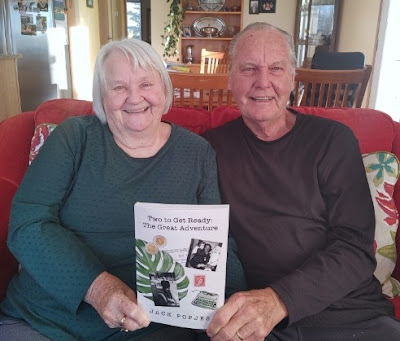


Born in the Netherlands in 1938, Jack immigrated to Alberta, Canada in 1950 as the oldest of a family of five children. He was the first of his family to be converted. He graduated from Berean Bible College where he majored in English and biblical exegesis. Jack and Jo met at this college and were married in 1962.

They pastored a Baptist church in Alberta for three years before joining Wycliffe in 1966, and moving to Brazil with three pre-school daughters. They began linguistics, translation and literacy work with the Canela people of Brazil in 1968.

August 01, 2020

Unleash Your Writing Dreams by Sandi Somers

Image by rawpixel in Unsplash
Do you have a dream of what your writing/published works could be? Lynn Simpson inspired this month’s theme with an earlier blog post:

I challenge myself and all of us,
to take a chance to unleash our writing
beyond the boundaries that may be tying up our creativity. 
And in celebration,
live out our lives as the masterpiece we are created to be.

Visioning Our Best Writing Selves

My most recent reset to unleash writing goals came this winter and spring. Our local writing group has been studying Julia Cameron’s Right to Write. In one exercise, she asked us to list things we wished we could do. I wanted my writers to take that exercise to the next levels, and so we spent a few minutes listing our writing wishes. 

To emphasize how imagination spurs us to accomplish our dreams, I read a blog post by Jack Popjes, part of which I've included here:

"We have the amazing God-given talent to picture in our mind
something that doesn't yet exist,
to mentally create situations that have not happened.
 Over time, we tend to accomplish the things we think about imaginatively.
The stronger and more emotionally we respond to our focused thinking and visualizing,
the surer the eventual outcome will match our mental picture."

 Knowing also that “a goal without a plan is just a wish,” I introduced the concept of “Visioning Our Best Writing Selves.” I asked each writer to list her wishes as accomplishments using this prompt: "By December of this year, I will have..." We were planning for specific success.

This was a powerful exercise and I recognized the amazing potential in each of our writers. It also put feet to my own desires and anchored me in working towards more concrete, achievable goals.

I continued writing wishes, journalling “dialogues” with God. I wanted to submit more articles, some on new topics and for new publications—and a number of ideas came to mind. Doing so meant I needed to be more consistent in my output. The author Mark Buchanan suggested completing 1,000 words of finished copy a week, something I have often accomplished since then.

Another major area that came into focus was clearer planning on a daily, weekly, short-term, and long-term basis. Both the book The 12 Week Year and our own Ellen Hooge’s Writer’s Planit have given me strategies to better organize my time and keep track of my progress. It's a step-by-step process.

One morning after I had written these and other dreams, I awoke to the Spirit’s voice: “Now give your desires to Me.” He will accomplish what I cannot do on my own. I just need to be faithful to His calling.

Now more than ever, God continues to encourage me with insight, wisdom, and strategies for my next steps. He promises to release my potential and the potential of my group of writers. And that promise is one I pray He will do for all of us:

Is there yet any seed left in the barn?
Until now, the vine and the fig tree, the pomegranate and the olive tree
have not borne fruit. "From this day on I will bless you."
~Haggai 2:19~

~ ~ ~

How is God nudging you (or has nudged you)
to make your writing dreams a reality?
What are small or large steps you can take now?
This week? This month?
What advice would you give to those struggling to accomplish their dreams?


September 01, 2019

Embracing Your Life’s Season(s) by Sandi Somers


“For everything there is a season, a time for every activity under heaven.” Ecclesiastes 3:1 NLT
by Love Institute

This month’s topic has been interesting, as my thoughts have shifted from one way of looking at seasons to another.
As a former teacher, September meant a new teaching year for me, a new term, a new cycle of learning. On the home front, late summer and fall means picking my apples and harvesting my vegetables.
These two themes—a new season and reaping what the previous season has produced—have become metaphors for what autumn means in my life.
A new season of personal growth
I’ve noticed over the years that God has given me what I call “three-month” seasons, new “semesters” of learning. Often these cycles begin with a challenge or a change of focus in an ongoing process of challenge, such as a difficult relationship issue. Or an area of character development as a Christ-follower. Or an area to take courage and trust Him. As I walk through the unknowns, He wants me to take one step at a time, one experience at a time. Sometimes I'm not sure what God wants to accomplish in me and in others, but often it’s only in retrospect that I see God's resolution and I hear His "Well done, good and faithful servant."
A new season of ministry
God is surprising me in this season with new leadership and ministries.
One example came recently when I visited my cousin Gene in the hospital. Just as I entered the foyer, I unexpectedly met a neighbour, Lanny, and her two young daughters. Through her tears, she told me her father had just had a massive heart attack and wasn’t expected to live. (He died several days later). I was filled with awe and wonder at how God had arranged my meeting with Lanny at just the right moment.
Afterwards, I asked God to strategically give me more Divine encounters, where I could provide comfort, support, healing, or prayer for others—whatever they needed. I knew He was already doing this, but I want to open my life in a greater way to see God heal, encourage and support others.
A season of maturity 
Over my life I have gathered wide experiences with their challenges in forming my character, attitudes, relationships and spiritual life. Many of these experiences are bearing fruit now in my senior years—and will. I know that some of my most important life's work is yet to come. And I am not alone. Jack Popjes, one of our InScribers, wrote that his ministry path has widened, not narrowed in his senior years. My life purposes will continue as long as God wants me to live.
A season of asking Jesus for my future needs
Jesus heals Bartimaeus 
This month’s theme asked us to consider our current season in life and ponder the question Jesus asked Bartimaeus, “What do you want Me to do for you?” (A prompt suggested by Sharon Espeseth. Read her blog here
So through all these seasons I’m asking Jesus to deepen my faith and relationship with Him.

To maintain a positive and cheerful attitude as energies decline and when health issues arise.
To support, mentor and encourage the younger generations in my family and others.
To use my talents and abilities as long as I can, and this includes writing. My Mom and a neighbour were inspirations for me in this area. Mom prepared food for the Mustard Seed Street Ministry until she was ninety-two. Mabel prayed faithfully for her family until she passed away at 102.
To finish well.
To leave a legacy of faith and inspiration.


~ ~ ~
As I write this blog post, I know that God has a divine purpose for us in all of our seasons.
How would you describe your season(s) at this time? Is it a pleasant gift or are your difficulties gifts in disguise? What do you want Jesus to do for you? In turn, what is He asking you to do?
Whatever your season, God is urging you to launch out with His daily strength and direction. 

Now may the God of peace…equip you with all you need for doing his will. May he produce in you, through the power of Jesus Christ, every good thing that is pleasing to him. All glory to him forever and ever!” (Hebrews 13:20-21 NLT).


November 01, 2017

An Invitation to Prayer by Sandi Somers

InScriber Bryan Norford once wrote on how he is driven to pray each day before writing: "Lord, my thinking and understanding is so often fallen and distorted. I desperately need your insight and wisdom, that as I write, I may clearly express your thoughts and desires.”
How does Bryan’s quote resonate with you?


Artists’ Morning Prayer

“In the morning, O Lord, you hear my voice.
“In the morning I lay my requests before you and wait in expectation” (Psalm 5:3 NIV).

Have you ever begun your prayer time feeling your thoughts are very general? I certainly have. However, I’ve learned a lot from David’s Morning Prayer in Psalm 5:3.

Let’s unpack that verse and explore what David meant as he prayed.

David begins with acknowledging that God hears him—in other words, he praises God.

For me, it was a wonderful experience when, several years ago on my morning prayer walk, I began my prayer by focusing more on God, praising Him for His many attributes and His love, a love beyond anything we can imagine.

          David next lay his requests before God. In writing those words, he used the Hebrew image from the morning sacrifices. “I lay my requests before you,” means an “ordered strategy”. Each morning the Levites reverently laid wood on the altar, each in its own place. Carefully they cut the sacrifices and placed them in order. Hi prayers were to be intentional, his requests well-thought out and specific.

         
 Just as David recognized an “ordered strategy” for his prayers, so I needed a prepared strategy to pray specifically for others, then to bring my artistic work before Him.

          In the last year, I’ve begun writing a list of points at the top of my blog draft as a reminder to pray each time I open my document and plan to write. This prayer includes:

·        Giving thanks for the abilities He has placed in me, the desire to write and the development of my skills and ministry
·        Surrendering my art to Christ for the Spirit’s enabling
·        Praying for the specific challenges that my writing presents as I begin writing or revising—the thoughts or images or structure, for example—those aspects of writing where I need the Spirit’s illumination that day.
·        Praying more diligently that the light of Christ would come into the lives and situations of my readers

Praying in this manner brought strength and peace, and a greater awareness of the Spirit’s guidance.

          Turning back to David’s prayer, he concluded by waiting before God in expectation. He knew God would answer him.

          What encouragement! Writer Madeleine L’Engle so aptly described this expectation: “Before we practice our art (for the day), let’s learn to practice the art of listening to what God has to say to us as artists,” she wrote.  This waiting before God is essential for creativity, inspiration, and a sense of direction.

Prayer warrior Dick Eastman adds: The more specific and complete (our) petitions, the more faith we receive for its answer.

 Over time, I’ve seen the Spirit infuse my mind with:
·        Words and images that spring to mind
·        Clues or directions as to where my writing should go
·        Structure: I was amazed last year when the Spirit began giving me a visual image of the outline for my writing piece. Even though I needed to fill in the details through hard work, the Spirit was guiding me in an area that I sometimes find difficult: structuring and organizing my work.

I concur with InScriber JackPopjes’ wisdom: “The ideas for these blog posts and their development into a well-rounded article do not come from my mind but through it. Each part comes from another Mind. It is the Creator Himself who puts the ideas into my head and leads me to expand and develop the piece.”

As we pray to develop an “ordered strategy”, we will demonstrate a deep dependence on the Holy Spirit who will give us both order and insight.

          What about you? What is your morning prayer like? How does the Spirit infuse your mind and your writing?


October 10, 2017

Giving Thanks for Faith, Family, Friends by Sharon Espeseth

In our front entry, over the door, we have a wooden sign that says, "Faith, Family and Friend." I liked this when I got it at a gift exchange, because it is emblematic of what is important in life and in our household. And I display it with appreciation.


Faith

"The Lord has done great things for us, and we are filled with joy." (Psalm 126:3 NIV) From creation to salvation to watching over us to his unfailing love and patience . . . the realm of what God has done and is doing for us is endless. I cannot contain my faith in the brevity of a blog, but "I will sing of the Lord's great love forever; with my mouth (and my writing and my living), I will make your faithfulness known through all generations." (Psalm 89:1 NIV)

I am thankful for the faith I learned from my elders and accepted as my own. I am thankful for God's Word that teaches how to serve the living God and how to live as Christ taught us. God's Word-- written by prophets, teachers, kings, and  apostles called from ordinary walks of life--informs my day-to-day life and my writing. "For the word of God is alive and active. Sharper than any double-edged sword, it penetrates even to the dividing of soul and spirit, joints and marrow; it judges the thoughts and attitudes of the heart." (Hebrews 4:12 NIV)

Many good books have been written and many excellent resources are available, but today I am giving thanks for the Holy Bible, the foundation of our faith.


Family

Like most of you, our family got together this past weekend and celebrated our thankfulness for each other and for the many other blessings in our lives. To me, our family is an earthly symbol of God's caring for us. How would shy Hank and quiet Sharon have managed to find each other in this noisy world, had it not been for the the Good Lord's leading, guidance, and wisdom? Yes, I was wise to marry Hank--not that I am perfect nor that he is perfect, but we are perfect for each other. And 42 years later, here we still are looking after and loving one another.

We wanted a family and God saw that we would have a family. Our first child, a baby boy, arrived 5 1/2 months after we submitted our adoption application. The second child, a baby girl, arrived 13 months later. The third child, another girl arrived on Valentine's Day the following year. Within 37 months, we had three children and life was in full gear.


God is great.
God is good.
But let us not thank him
just for the food.


Our family continues to grow by sons-in-law and grandchildren. We now are a family of 13 and we have much to be thankful for. When Hank and I were young, strong and full of energy, we didn't see the road ahead. As we have aged, health problems and waning energy can hold us captive. When we need help, however, the kids come. The kids are a source of help and support: a resource of sorts, but much more!


Our Original Family of Five


I always have been, and still am, close to the members of my birth family. Although some of our family have left this earthly realm, I am thankful for their loving influence on my life. I am thankful for my sisters and their families, who are also an important part of our lives.

None of us is perfect, but God has a way of working with broken vessels. He takes us where and as we are and leads us, if we are willing, to the place he knows is best for us.


Friends

We who have good friends are blessed. We can get busy in our lives and forget to show our appreciation for their friendships. A friend is a resource who can bring a well-spring of joy and blessing to our lives, and hopefully we can bring blessing to their lives as well.


Writing this blog seems an appropriate time to say thanks to the friends I have gained through my writing years. I think of the Women Word Weavers in our hometown. Some of our founding members, including me, are still around for the meetings, for keeping in touch, exchanging ideas, and encouraging one another. How thankful I am for their faithfulness and loyalty.

InScribe Christian Writer's Fellowship has been another boon to my continued growth and confidence in myself as a writer. I am thankful for the group as a whole, for our dedicated executive and volunteer workers, for Connie Inglis and Jack Popjes as spiritual advisors, and for the members of the prayer group, who offer prayer support for our members when it is needed.

As Paul said to the Philippians,

"I thank my God every time I remember you. In all my prayers for all of you, I always pray with joy because of your partnership in the gospel . . ." (Philippians 1:3-5a NIV)


June 01, 2017

On Journals and Writers’ Notebooks by Sandi Somers

This month our writers discuss their experiences with writing in journals and/or notebooks. InScriber Violet Nesdoly gave us a prompt when she wrote: "the very act of noticing and writing things down makes us more observant, alert people—all part of the package we need to be successful writers.” 


“Write the vision…” Habakkuk 2:2

My journals and notebooks

Over my life I’ve had different kinds of journals: travel journals, including one from my two years in South America; several binders full of cultural perceptions and classroom interactions while teaching ESL; and a journal of praise which focuses on the positive side of writing. I keep a notebook handy for writing ideas for this IWO blog.

I also have an almost-daily journal, in which I explore and process dilemmas and how God is speaking to me through scripture in my quiet time. Writing helps sort through my thoughts, and I come to a deeper understanding than I would have without writing.

A wonderful benefit of journal writing is that often gem thoughts become the raw material for articles and blogs. For example, while writing an article for our InScribe Christmas Anthology, my writing seemed flat. With divine timing, God led me to a forgotten version I had written some years before. There I found more vivid descriptions, more immediate emotions and clearer details which strengthened that article (it was accepted, by the way).


On the Values and Varieties in Journals/Writers’ Notebooks

Journals and writers’ notebooks are very individual, and the varieties and values are endless: ten minute freewrites of "moments in memory "; an idea journal which you can carry with you; a quotation journal; a submission journal; a dream journal. Or your journal can be the first draft of a memoir, story or other article.
           
Over the years I’ve collected a number of journal/notebook ideas and approaches from various writers. Here are a few.

Julia Cameron, in The Artist’s Way, advocates “morning pages”: three pages of free writing first thing every morning. Doing so, she says, taps into our left brain’s creativity and inner wisdom without concern for that “inner critic”.  Many writers follow her advice.

Judy Reeves advocates another daily approach: writing practice. Her book, A Writer’s Book of Days, includes focused prompts, one prompt for every day of the year.  Writing from prompts, she says, is a discipline that improves writing as well as gladdens our spirit and adds to the quality of life. 

Violet Nesdoly switched from journal writing to a writer’s notebook. Rather than a process of fluid writing of journals, she said a notebook is a place to keep track of: details of life, ideas for future projects, lists, dialog, telling details in a scene, and more. (Read her article filled with practical ideas here.) 

Joan Didion’s notebooks are a “flotsam and jetsam” of ideas. She often wrote just words, locations, time of day, or brief notations—sometimes wondering on rereading why these details had been so important in the first place. She would probably never use these erratic thoughts in her writing, but they often brought back vivid memories and moods from those earlier times--memories she was otherwise likely to forget. (Read her article, “On Keeping a Notebook” here).

Writers have creatively woven journal entries into books or articles. Madeline L’Engle and her family spent one summer on a USA cross-country camping trip. At the end of each day she pulled her typewriter from the car and journaled the family’s excursions. Later this trip became the basis for a children’s adventure novel, The Moon by Night. (As I read the novel, I easily noticed the connection between her family’s travel and the adventures in the novel.)

As Christ followers, we often journal our daily devotions, spending time alone with God and opening ourselves to whatever God want us to hear. Janice Elsheimer, in The Creative Call, called her journal the “artists’ daybook” (a name I’ve adopted). Writing daily for ourselves alone, we come to hear the voice of the Spirit and “understand more clearly the relationship between journaling and listening, between listening and being an artist.”

Jack Popjes, past-president of InScribe, has incorporated a unique approach to journaling daily devotions:  he writes his regular prayer requests as conversations with God—question-and-answer format. Writing his prayers this way helps him keep track of his requests and God’s answers.  The additional benefit, he wrote, is that he’s also practicing his writing craft. (You can read his article, “Let Your Fingers Do the Talking,” in our InScribe anthology, 7 Essential Habits of Christian Writers.)

In conclusion, Phyllis Theroux in The Journal Keeper wrote that your journal or notebook “should be a wise friend…Choose what you think has some merit or lasting value, so that when you reread (it) in years to come, it will continue to nourish you."

 What varieties of journals/notebooks do have, and what value do you place on yours?

PS Writing this blog has been inspiring. My daily journal had come almost to a standstill, but last week new ideas began flowing and I resumed my morning pages with a renewed vigor. Hmm, I think I’ll try Jack’s conversations with God, too!


Further resources

In her blog on notebooks, Amy Ludwig Vanderwater’s guests explain different ways they use notebooks. (Check it here)   

Famous authors discuss the importance of keeping a journal (Read here)

Here’s another read on keeping a notebook or three.


April 12, 2016

How I Became a Writer by Jack Popjes

Jack Popjes is the guest blogger today, and it must be noted that in typical 'Jack' style, the email that went along with this post was every bit as entertaining as the post itself. Enjoy!


I started my writing career with both a major advantage as well as a serious handicap. I grew up in the Netherlands while it was under Nazi occupation. Television and You-Tube didn’t exist, and enemy soldiers had confiscated all radios. This meant that as a child I could read stories without distraction. Since Dutch is written phonetically, I easily learned to read while very young. I can’t remember a time in my life that I didn’t know how to read. So by the time I was twelve years old and my family emigrated to Canada, I had read hundreds of books, including classics translated into Dutch by such authors as, Jules Verne, Charles Dickens, and Daniel Defoe. My head was filled with stories, both ones I read, and those I made up. What an advantage!
The handicap was that when it came to writing, the educational system in the Netherlands focused not on the art of story telling, but only on the skill of cursive handwriting. Since I suffered from poor hand-eye coordination, I could never satisfy my teachers, even though they forced me to practice for hours at a time as homework—an odious task I loathed with all my young heart.
Our first house in Canada was an old farmhouse that hadn’t been lived in for some years. Discarded under my cot in the attic I found a handwritten sheet of paper. I didn’t know much English yet, having been in Canada only a few months, but I  figured out that it was written by a girl as a grade six homework assignment.
I was astonished to see that it was about fingernails! She explained why we have fingernails, and how awful it would be if we didn’t have them. I was fascinated. The only thing I had ever heard about that subject was, “Stop biting your fingernails!” shouted at me by my parents and teachers. After a few more months, I started reading the newspaper, especially the columnists who wrote in an interesting way about all sorts of topics. “Someday,” I promised myself, “I, too, will write, not just stories, but my thoughts and ideas.”
By the time I was thirteen, I appreciated good writing and read at least one book a week in English. My mind was filled with story plots, character descriptions, conversations and arguments. That part of my writer’s apprenticeship was well on the way.
I remember a grade nine English class where we were given half an hour to write a personal letter. As long as my writing was legible the teachers didn’t care how I shaped each letter. I felt liberated to focus on writing the right words without worrying about their shape. I finished my letter in ten minutes, then opened a book and read while the rest of the class frowned at their paper, their pencils bobbing up and down as they wrote, erased, and wrote again. The next day the teacher pinned my letter to the bulletin board as an example of what a good creative letter should look like. It was the first time in my life that a teacher liked what I had written!
The next turning point was learning to touch type in high school and in college buying a portable typewriter. I also started keeping a daily diary of events, thoughts, and feelings which I kept up with increasing faithfulness over the next six decades.
As a young pastor, I approached the local newspaper editor, and offered to write a regular column. He accepted. More encouragement! Years later, as a missionary, I wrote stories for our quarterly illustrated newsletters, sometimes wondering if anyone read those six pages. A note from a friend encouraged me more than she realized.
“Coming into the house with the groceries I saw your newsletter in our mailbox. I intended to open and just glance at it, but got started reading, standing by the kitchen counter. Suddenly I noticed something milky dripping off the counter onto the floor. I’d been reading so long the brick of ice cream was starting to melt.”
I took it as a graduation from my apprenticeship training. 

*******

Jack Popjes, affectionately known as the 'Word Man' has at least 27 published books. To quote Jack, "That is if I count the 750-pge Bible translation I did in the Canela language, the learn to read booklets, the linguistic descriptions, and orthography book in Portuguese. These were all published by either Wycliffe Brazil or the government, or the Bible Society. I self-published two children’s books for my kids and grandkids, and self published two ebooks. Wycliffe also published the three printed books I still sell at speaking engagements. So I guess it’s okay to call myself a writer."

Yes, Jack, I think it is safe to say so!
Check out his website for more great stories.