Showing posts with label writing resources. Show all posts

April 18, 2026

Running on Fumes by Susan Barclay


 from Clker-Free-Vector-Images on Pixabay


This month’s writing prompt presents a challenge. For me, it must read, “How do you fill your creative container and strengthen your craft when time is not your own and you’re running on fumes?”

The simple answer is, it’s hard. Near impossible for me if I’m honest.

Filling your creative tank and improving your craft require time, opportunity, and practice. Time is a precious commodity in these days of caregiving and sleep deprivation. Getting up before others rise, when I can do it, is time I use for prayer and connecting with others online for friendship and support. I have a limited amount of time for writing – contributing content to this blog is currently the biggest part of my practice in that regard!

Opportunity sometimes comes in surprising forms. This semester my son took a creative writing course at his college. It was an elective we felt he would do well in as he’s inherited his momma’s writing gene, and as the course comes to an end, he is sitting at 99.6%. (Pardon me if I brag, LOL.) When we discovered that he’d have weekly writing prompts, I said I’d do them too. It’s an “opportunity” I took advantage of the first few weeks but discontinued when the exercises got more difficult and time-consuming. However, for the major final assignment, I’ve had the opportunity to provide my son with editorial suggestions and that has been a gift to both of us. One’s craft is strengthened through the analysis and revision of work as much as it is through the initial writing.

If I had more time, I’d write more. I’d work on revisions more. I might take classes, read more on the subject of writing, listen to podcasts, attend writers’ conferences. I’d get out in nature more often and take more pictures, both fillers of creative containers, for sure!

I’m part of two book clubs and since reading is also an important part of strengthening one’s craft, I’m thankful for the challenge of reading a minimum of two books each month, ten months of the year. An excellent book I read some time ago on the subject of writing is Self-Editing for Fiction Writers: How to Edit Yourself into Print by Rennie Browne and Dave King. In Downriver Writing, Jane Ann McLachlan (from whom I once took a course) shares her best writing process. I also recommend Cary Tennis and Danelle Morton's Finishing School (which I first wrote about here), Janice Elsheimer's Creative Call, and Stephen King’s On Writing, which is both a how-to and an intriguing memoir of sorts. FellowScript Magazine, published by our own InScribe Christian Writers’ Fellowship, is a valuable resource.

Other titles I hope to get to on my writing bookshelf include, in no particular order:
Bird by Bird by Anne Lamott

To Be Told by Dan Allender

Your Novel Proposal from Creation to Contract by Blythe Camenson and Marshall J. Cook

Writing Young Adult Novels by Hadley Irwin and Jeannette Eyerly

Arc of the Arrow: Writing Your Spiritual Autobiography by Carolly Erickson

Being a Writer by Travis Elborough and Helen Gordon

Writing for the Soul by Jerry B. Jenkins

Memoir Writing for Dummies by Ryan G. Van Cleave

The Portable MFA in Creative Writing by the New York Writers Workshop

WriteShop, volumes 1 and 2 by Kim Krautzer and Rebecca Oldar (a teacher’s manual I purchased when I was homeschooling my children years ago)

I haven't gotten around to reading Julia Cameron's The Artist's Way, but I still have plenty of unfilled pages in books I picked up at Indigo several years ago: 300 Writing Prompts and Complete the Story.

When I do have time to read these, where do you suggest I begin?!

_______________________________


For more about Susan Barclay and her writing, please visit www.susan-barclay.blogspot.com

April 12, 2026

The Resource of Shimmering Images by Sandi Somers


Writers occasionally talk about where we get ideas and inspiration for our writing, but we don’t usually think of them as being a writing resource. Yet they are!

Inspiring ideas are so important that the writer Lisa Dale Norton called them “shimmering images”. She explains:
“A shimmering image is one of those memory pictures you’ve had for years.” It is “a memory that rises in your consciousness like a photograph pulsing with meaning ….You have thousands of these images inside yourself.” They stay with you. You can’t get them out of your mind. “They have energy….these images flitting into consciousness are stories waiting to happen.”[i]
Let’s unpack “shimmering images” and their implications for our writing.

Shimmering images can spring from all five senses

While the idea of “images” brings to mind the sense of sight, they’re also driven by the other senses. The aroma of baking bread reminds me of coming home from school with the house filled the delicious fragrance of my mom’s baking that day, and I couldn’t wait to bite into a piece and taste it. I love the feel of the sun’s warmth on my face as I step outside on a warm April morning. I can be absorbed in my thoughts, but when a bird sings, my attention is immediately drawn to the sound of its melody. Yet these experiences are almost always accompanied by sight.

Shimmering moments take us back to the context of our experience

We see our younger selves as we were then, where we were, and the mystery that surrounded us. For example, in a spiritually transformative event in Colombia, I was debating: should I go home to Canada and stay? or should I go home for a break and return to Colombia to engage in wider mission work? I remember where I was in the missionary guest house, sitting on a rocking chair, feeling the overhead fan blow cooling breezes onto me, and hearing the parrot announce, “Tobito! To-BI-to!” as Tobito the cat strolled into his line of vision. I recalled the sacred silence that followed, and knew my place was back in Canada. It was a powerful moment.

Shimmering images can even occur in an unexpected thought

I think of Tolkien. As a professor in Oxford University, he was marking student papers, and out of nowhere popped the thought that went something like this—“In a hole in the ground there lived a hobbit.” He said he had no idea where the idea came from, nor what a hobbit was, nor what he’d do with it. However, the image went on to become a major driving force for writing The Hobbit and The Lord of the Rings.

Shimmering images can arise from all areas of life

Everyday events, from ordinary to breathtaking, become charged with significance. My years growing up in rural Alberta, my hobbies such as reading, gardening, skiing in winter, quilting, and bird watching have all inspired shimmering images.

Farther afield, I lived in Colombia, travelled to other countries, and taught English to immigrants and refugees from 130 countries. Not only have I grown in understanding of many people, their customs, and beliefs, these experiences have given me a wider world view and new shimmering images that energize my writing.

Shimmering images have great emotional impact

It has been said that we remember significant moments because of their emotional impacts. Something startles us, makes us laugh, gives us joy or awe. Or we remember our hurts, a difficult relationship, our rise of anger when we see injustice. All these emotional impacts give shimmering images their power, and according to Norton, are the source of our most potent stories.

Shimmering images can lead to universal themes that touch the hearts of our readers

Our stories can become effective bridges between us and our readers. Readers may not experience the same situations we write about. But larger themes leap off the page and embed themselves into their lives—themes such as hope, forgiveness, healing, growth in our relationship with the Lord, answers to prayer, and more.

And that is why we write. From the heart of shimmering images to the greater themes that touch people’s lives, the Lord asks us to be His co-writers, sharing His greater story. “Go…and tell (others) what great things the Lord has done for you…” Jesus said (Mark 5:19).

In this way we share His love and redemption to a world that so desperately needs Him.


Sandi Somers’ writing passion is to help readers grow their faith in Jesus, including their vision of what God wants them to be and do. She writes in several genres—devotionals, personal essays, and Biblical fiction. Sandi lives in Calgary, Alberta, the delightful city between the Rocky Mountains and the Prairies.


[i] Lisa Dale Norton, (Shimmering Images: A Handy Little Guide to Writing Memoir, New York: St. Martin’s Griffin, 2008), 28-29.

Image by Yuri_B by Pixabay

October 16, 2017

10 Sources for Writing to God’s Glory by Nina Faye Morey


“I am a little pencil in the
hand of a writing God
who is sending a love letter
to the world.” 
~Mother Teresa 

I have many writing resource books on my bookshelves and several more on my Kobo eReader. I also have some well-liked writer’s websites and blogs. I can’t possibly cover all of them in a single blog post, so I’ll focus on a few favourites that I’ve found useful in helping me to write to God’s glory.


#1 - The Holy Bible, Bible Commentaries, & Bible Concordances: I want to ensure my words faithfully reflect God’s loving message, so I regularly pray and read His Word. I search for relevant Bible verses that will help me to make my points and impact reader’s lives. I have several Bible versions on my bookshelves, the NIV, KJV, NKJV, NRSV, NLT, to name just a few. I quote verses from whichever version expresses my thoughts the best. I also consult such Bible study guides as The Bethany Parallel Commentary and The New Strong’s Concordance. I regularly visit Bible websites to quickly locate passages, like Biblehub and Biblegateway.

#2 - Elements of Fiction Writing Series by Writer’s Digest Books: This is a terrific how-to-write series that includes Nancy Kress’s Dynamic Characters and Beginnings, Middles, & Ends; Orson Scott Card’s Characters & Viewpoint; and James Scott Bell’s Conflict & Suspense and Plot & Structure, and several others.

#3 - Busy Writer’s Guides by Marcy Kennedy: Showing and Telling in Fiction, Strong Female Characters, Dialogue, How to Write Faster, and more. This series of short guides is great when you’re in the middle of writing and want a quick reference.


#4 - Grammar/Editing Blogs: Mignon Fogarty’s Grammar Girl blog is my first go-to for answers to questions about correct grammar or punctuation. I also like the following: Grammarly Blog, Writer’s Relief, The Editor’s Blog, Jane Friedman’s blog, and C.S. (Susanne) Lakin’s Live Write Thrive. Other favourite grammar resources are The Elements of Style by William Strunk, Jr. and E.B. White, Coles Notes Handbook of English Grammar and Composition, Canadian Secretary’s Handbook by Collier Macmillan (A treasured 80’s holdover from my secretarial days.), and a quick little reference book, Write! Better by Ray Wiseman.

#5 - Joanna Penn’s Blog, Books, & Podcasts: Joanna Penn is a bestselling author, international speaker, and award-winning entrepreneur. She’s written several self-help books for writers, including How to Make a Living with Your Writing, How to Market Your Book, and Successful Self-Publishing. Her blog The Creative Penn is a favourite among creative writers. She also has a popular podcast, The Creative Penn.

#6 - Writer’s Magazines/Newsletters: My favourite writer’s magazines are InScribe’s FellowScript (I may be just a bit biased!), the Saskatchewan Writers’ Guild’s, Freelance, and The Writer’s Digest (along with their website).

#7 - Writer’s Organizations/Websites: InScribe Christian Writers’ Fellowship and The Saskatchewan Writer’s Guild. Besides their quarterly magazines, both of these writers’ groups have lots of valuable information on their websites and provide great conferences, workshops, and courses for writers.


#8 - Dictionary, Thesaurus, & Quotations Dictionary: I love my well-used hardcover copies of the Oxford Thesaurus, Canadian Oxford Dictionary, and Oxford Dictionary of Quotations.

#9 - Poetry Resources: Creating Poetry by John Drury, The Poet’s Dictionary by William Packard, Writing the Sacred by Ray McGinnis, and Merriam-Webster’s Rhyming Dictionary.


#10 - Writers’ Market Guides: The Canadian Writer’s Market, The Christian Writer’s Market Guide, Poet’s Market, and The Best of the Magazine Market for Writers.


Do your best to present yourself to God as one approved, a worker who does not need to be ashamed and who correctly handles the work of truth.
~2 Timothy 2:15


Photo Credits: © Nina Faye Morey


October 15, 2017

Favourite Resources Take Two! Tracy Krauss

At the risk of repeating myself, I'd like to share my two all time favourite writing resources, since that's what we're talking about this month. Why worry about redundancy, you ask? Well, I wrote a very similar article on the InScribe professional blog in September. But these are SO GOOD, it's worth repeating here!

Learn Scrivener Fast by Joseph Michael
I'd been using Scrivener for about five years, give or take a few months. I loved it from the moment I started just for the way it organized my writing, but I never used it much beyond a word processing tool. Then I watched a free online video by Scrivener coach Joseph Michael. I realized there were so many more things Scrivener could do - including formatting everything from epubs to mobi files to paperbacks to plays and more!

But, as a long time Scrivener user, I thought I should be able to figure things out for myself. The software comes with tutorials and there are tons of videos online, so I took those free tidbits from Joseph Michael and continued on my merry Scrivener way.

Things changed drastically when I tried to format a book. About forty hours later, bleary eyed from watching confusing youtube tutorials and upmteen 'trial and error' compilations, I gave up. Compiling my files for publication just wasn't as intuitive as I had thought. In desperation, I signed up for Joseph Michael's course.

AND IT HAS BEEN THE BEST INVESTMENT I HAVE EVER MADE FOR MY WRITING CAREER!

I've managed to format and publish multiple ebooks, paperbacks, and pdfs. I organize my blog posts using Scrivener, and I even do a lot of my outlining using the corkboard function. I can't imagine writing without it and whenever I run into a snag, all I need to do is go to Joseph Michael's easy to follow videos and - voila! Problem solved!

If you’re planning to delve into indie publishing, this is the course for you. It is worth every penny hundreds of times over!

Your First 10k Readers by Nick Stephenson
I’m sad to list this course second, because it has also been such a good investment for me. Nick Stephenson has appeared on multiple podcasts with the likes of Joanna Penn, Mark Dawson, Joel Freidlander and others. He talks about ‘lead magnets’, permafree books, automations etc. all with step-by-step videos and very useful cheat sheets and other helpful resources. You can find many similar courses out there on creating ‘systems’ for writing and marketing, (like Shelley Hitz’s ‘Author Audience Academy”) but I happened to come across Nick’s back in the summer of 2015. I took the risk and signed up – my first time actually spending hard earned cash on an online course.

It has been worth the cost ten times over. It's not that I'm now rolling in cash. Nick cautions students right up front that his system takes work. It is not a get rich quick scheme or a fly-by-the-seat-of your-pants way to fool people into buying your books. What it is, is a really smart and well laid out system for growing your audience while offering value to your readers - all in a step-by-step format that keeps that 'overwhelmed' feeling from taking over.

I voraciously listened to the entire course in the first week or two upon receiving it, but there is so much content and so much detail that there is no way I could implement everything at once. Heck, I'm still taking baby steps two years later, but I've managed to make some significant inroads. 

Another wonderful thing about Nick’s course is that he continues to add new content and update old information without adding to the cost. Plus, he’s a very funny guy, so it’s quite entertaining to listen to him teach. You’ll see what I mean if you watch his free training videos. (Excellent, but the entire course is so much more in depth.)


Of course, there are many more valuable resources out there but these are my two all time favourites to date.

October 14, 2017

My Most Valuable Resources as a Christian Writer - Ruth L. Snyder


People often talk about how isolating it can be to be a writer. This can definitely be an issue because authors do spend hours alone, writing. As I thought about my most valuable resources as a Christian writer, the word community came to me. This past year has been one of the darkest and most difficult for me personally. However, through the struggles and pain, God has shown me the treasures I have.


Without a doubt, my most valuable resource is God's Word. During conference I described it as my life-blood. In a recent time of family Bible reading using The Family Project Devotional we discussed whether God's words taste "sweeter than honey" to us. God provides instruction, correction, encouragement, and relationship through His Word. I don't always spend the time I should reading, studying, and memorizing Scripture. However, the time I do spend in it is precious and powerful. Included in this post are a few verses which have spoken to me lately.


As a Christian writer I deeply appreciate the faithful prayer supporters God has brought into my life. I have seen many answers to prayer in my marriage, family, and writing because brothers and sisters intercede for me. Shelley Hitz challenged members of her Author Audience Academy to put together a writing prayer team. When she shared, I couldn't believe I had never thought of asking people to specifically pray for my writing projects. A few months ago I put out a call in my local church and on Facebook, and I now have a prayer team. I give them specific things to pray about and now also have an email list so that I can report to them on a regular basis. (Shelley also shared this information at our recent InScribe Writers' Christian Fellowship Fall Conference. Recordings are available!)


Beta readers are another valuable resource for me as an author. (Shelley Hitz also spoke about this at conference.) I'm currently writing 31 devotionals on the topic of spiritual warfare. In the past couple weeks I have been putting together my group of beta readers for this project. (For some reason, I have many women offering help, but only 1 man so far. If you would like to round out my beta reader team, please let me know.) These are people who are willing to commit to reading my manuscript and giving me honest feedback. These comments are like gold to me as an author. Someone asked me if I really wanted honest feedback. Apparently some people don't want to know if their writing needs improvement. I know that my writing can always be better. Yes, comments sting sometimes. But I'd rather hear those opinions now, before my book is published, than hear them as reviews after my book is published!


 Social media can be a huge time waster, but for me it is also a source of community. One thing I often do is share what I'm learning from my devotional Bible reading. All the pictures in this post were created with the WordSwag app and shared on Instagram, Twitter, and/or Facebook. Other photo editors I use often are the Preview app on my iMac, and Canva.

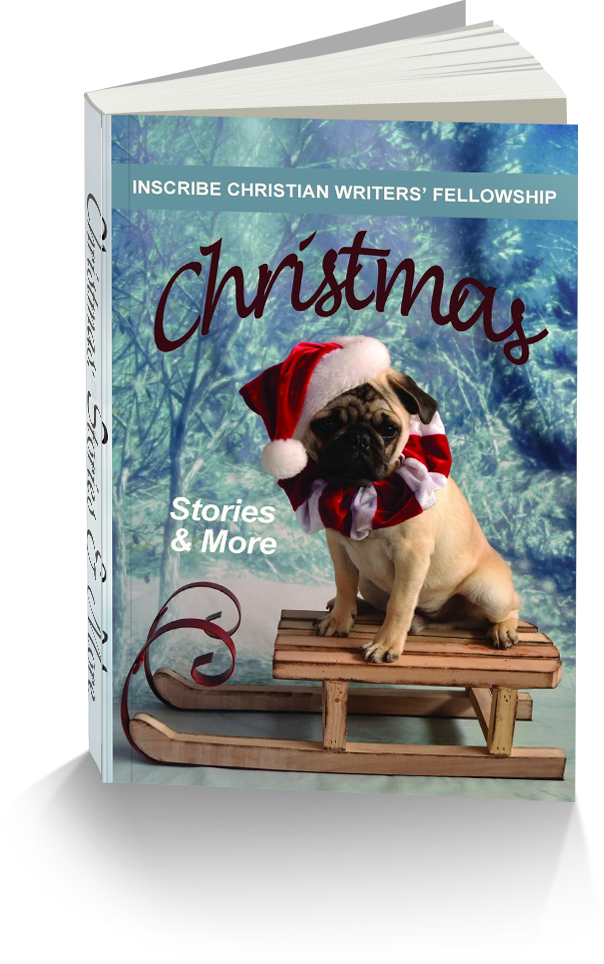
Speaking of resources, I'm delighted to have a children's story, Hope for Jimmy, in the newest InScribe anthology, Christmas: Stories & More. This book is a wonderful collection of stories, poems, dramas, recipes and more with contributions from 40 different Canadian authors. Purchase your own copy or buy them for presents!


I've enjoyed reading about other valuable resources shared by Christian writers this month. What is your favourite resource? Or which new resource are you going to try? I'd enjoy hearing about it in the comments.

Ruth L. Snyder


Creativity is my passion. My mission is helping other creative people achieve their goals. How can I help you? Follower of Jesus. Coach. President of ICWF.


October 08, 2017

7 Great Write-Better Sources - Dayna Mazzuca

Good news! We, as writers, are not alone.

While too much input can distract from the work of writing. Now and then we need someone to guide, equip or encourage us. To make a way forward. Mentors can prove indispensable to the writer in serious pursuit of excellence.

A friend, after all, makes all the difference.


ONE. Write Brilliant online course offered by Christian authors Margaret Feinberg and Jonathan Merrrit. So encouraging and hands-on. https://writebrilliant.com

TWO. Stephanie S. Smith - http://www.slantletter.com

THREE. Joanna Penn - https://www.thecreativepenn.com

FOUR. Inscribe and Word Guild online and in person. For Christian Writers in Canada!

FIVE. Canadian Authors' Association. Fantastic opportunities. https://canadianauthors.org/national/ OR http://www.canauthorsalberta.ca/

SIX. Local Writer-in-Residence Programs. Send them a sample. Go for coffee. Be encouraged.  I've met with three different writers over the years and each time my writing went forward.

SEVEN. Retreat spaces to get away for a weekend to write OR pray. Best to pick a focus I find.


www.daynawrites.com

October 05, 2017

Reflecting on Resources by Glynis M Belec


I love my dictionary, the big black book
It's always been my friend.
Thesaurus is the second one, on which I do depend. 

Rhyme-zone, Inscribe, Fellowscript 
Are handy things to read.
Websites, blogs and courses, too, all help me to succeed. 

But most of all when I feel lost
And my brain goes on a break,
Prayer is on my resource list, with that there's no mistake! 

God whispers words that make me smile
He tells me to be still
And then He pours the words right in as I try to do His will. 


A few of my favourites on my shelf!
I have to agree with many of the other writers who have preceded me. So many good resources out there these days. I love to read how other people 'write' and also I love picking up quick tips, so I use YouTube for inspiration and direction, especially if I need hands on help with my programs or the like. I am such a visual learner so this works so well for me. 

Here's four great books I love having in my arsenal of resources. 


#1. My CHILDREN'S WRITER'S WORD BOOK is one of my favourite resources for when I am writing for children. It helps a children's writer choose exactly the right word for a particular age group or grade level. This is the new, 2nd edition and it is really a great resource that I use often.


#2. This next book - THE NAME BOOK - is such a great resource for me. It's a book from the 80s but to me, it never gets old. It gives all sorts of ideas for character naming including the definition of names, meanings, spiritual connotations and supporting scripture. Love that.

#3.The INDIE AUTHOR GUIDE is described as a 'roadmap to success'. I can think of another Book that fits that description better, but this is a very good book for the indie author who needs direction with all sorts of information from organization to publishing to building an author platform and SO much more. 

#4. I like WRITING PICTURE BOOKS because it totally respects children's writers of all levels. There's plenty of instruction on creating characters, plotting, working out beginnings, middles and endings, hands on revision exercises, tips on researching markets, and plenty more.


  And then there is the Greatest Resource ever!
A few wise words for contemplation ... 


Proverbs 1:5
Let the wise hear and increase in learning, and the one who understands obtain guidance,

Proverbs 18:15 
An intelligent heart acquires knowledge, and the ear of the wise seeks knowledge.

Proverbs 9:9
Give instruction to a wise man, and he will be still wiser; teach a righteous man, and he will increase in learning.

Proverbs 1:7      

The fear of the Lord is the beginning of knowledge; fools despise wisdom and instruction.


Glynis lives, loves, laughs and does an awful lot of reading, writing, publishing and praying in her home office. 
        How thrilled Glynis is to be part of CHRISTMAS WITH HOT APPLE CIDER - an anthology filled with a wonderful assortment of Christmas short stories, memories, drama and poetry. 
                     www.glynismbelec.com 

October 04, 2017

Tools to Keep You on Course by Susan Barclay

I can't find it in the archives here, but I was certain I'd written about this before. I was hoping I could just direct you to the original post since nothing has changed (insert smiley-face). 

Here's the list:

First there are the physical tools: the writing instruments (pen, paper, computer, laptop, tablet) and the space you write in (separate office, niche in one of the room's of your dwelling place, library, cafe). Do you write best with or without music/background noise? Can you write in a cluttered environment or must it be clean and tidy? Make sure you have what you need before you get started - many of us writers are easily distracted!

Now onto the books and online resources:

The Writers' Market - specific guides for different types of writing: poetry, novels and short stories, material for children. These tools provide helpful articles as well as a variety of places you can send your work and agents who can help you with the submission process.

Writer's Digest Magazine - a monthly publication with helpful articles, columns, writing prompts, and contests. Also the Writer's Digest website.

The Inscribe website and listserv. Maximize your membership by utilizing these and reading the current issue of Fellowscript, which contains articles by the members as well as columns, contests and market information.

The best book on writing I've read so far is Self-Editing for Fiction Writers: How to Edit Yourself into Print by Rennie Browne and Dave King. It's been a long time since I read it, but I found full of  helpful advice for the revision process.

Participation in writers' groups. I've been part of a writers' group for fourteen years now and nothing beats the feedback and encouragement of fellow sojourners who know a thing or two about the writing and publishing processes. If you can't get together with writers in your local area (every Fellowscript issue lists Inscribe writers' groups), try to find an online critique partner and shoot your work back and forth. Nothing has improved my writing more than the practice and discipline of writing and receiving constructive criticism.

 Most importantly for writers who are Christian: be in God's Word daily and be in prayer. We want to be in the centre of God's will for our lives and for our writing. We can't be either if we're not connecting with Him. As it says in the notes of my Transformation Study Bible (Warren Wiersbe, NLT), 
"Our relationship to the Word of God indicates our relationship to the God of the Word."  
If our writing isn't going well, it's possible that we have gone off-centre and God wants us to refocus our attention on Him and what He wants.
____________

Post-script: I still haven't gotten around to reading Julia Cameron's The Artist's Way, but I recently noticed a couple of other books in the form of guided journals: 300 Writing Prompts and Complete the Story. These look like fun resources to get the creative juices flowing!
_____________
Please visit my personal website at www.susan-barclay.blogspot.ca

June 16, 2017

My Various Writing Journals by Nina Faye Morey


This month’s blog addresses the value of keeping a writer’s journal or notebook. Since childhood, I’ve made several attempts to keep a Daily Diary. However, most of these entries turned out to be tedious recordings of trivial everyday experiences, so I soon became bored and abandoned them. But over the years, I’ve managed to amass a number of writing notebooks or journals. They vary in size and purpose: small ones I keep in my purse to record random thoughts and observances that may make their way into my writing; medium-sized ones I use to jot down ideas, goals, and notes pertaining to my writing, and large ones for writing rough drafts.


My Journals Vary in Size & Purpose

My Common Place Book started as an assignment for a university English class I took in the 90’s. It’s a place where I collect some of my writing, other people’s writing that’s moved me, quotes and sayings I especially like, and my observations and thoughts about events that occur in the world around me.

I also keep a Spiritual Journal filled with scripture verses and spiritual sayings that have been especially meaningful for me. It contains my personal reflections on them, along with other enlightening revelations that occur to me from time to time. I also fill them with spiritual symbols and imagery that often show up in my articles, stories and poems. For instance, the iconic imagery in a Ukrainian Orthodox church that I visited during one of my seminary classes made a lasting impression on me. I’ve also long been fascinated by Ukrainian Easter Eggs, or Pysanky, and I’ve learned the meaning of their various colours and designs. I’ve used this knowledge to “colour” some of my Christian writing.

In addition, I keep several Writing Notebooks/Journals. These are filled with all kinds of notes related to my writing. I’ve jotted down ideas for novels, stories, articles, and poems. Some of these notes have already been converted into pieces that have been published in various periodicals over the years. Others still await their turn in the limelight. Another notebook is filled with notes I’ve collected from a number of writing conferences I’ve attended. Still others are notes I’ve taken while reading other authors’ works or resource books for writers. Several are filled with rough outlines or first drafts of short stories, articles, and poems. The first draft of my romance novel was written in longhand and fills three of the larger journals. I’m now in the middle of typing and revising the second draft on my laptop.

Journals are Great Writing Resources

Lastly, I have a Writing Portfolio where I keep copies of all of my work that’s been published in various periodicals and anthologies, along with some contest award-winners.

The practice of writing in these various writing notebooks and journals helps me to develop and clarify my thoughts and feelings on a variety of topics and gives me inspiration and fodder for my writing projects. Keeping my Spiritual Journal has helped me process Scripture verses that I’ve read and delve deeper into their meaning so that I can grow spiritually and apply what I’ve discovered to my Christian writing. The verses, sayings, and quotes that I jot down in this journal also serve to build up my faith and devotion to God.

Whether I’m noting the good or the bad as I write in my various journals and notebooks, it usually works its way into my writing. If I’m working through some personal struggles, I know others out there are in similar situations. Because of my journalling, I’m able to write about these situations so my readers know they’re not the only ones experiencing them.


Photo Credits: © 2016, Nina Faye Morey