Showing posts with label beta readers. Show all posts

March 13, 2025

Do Setting Details Really Matter by Steph Beth Nickel


When you read the title of this post, you may have had a strong visceral reaction.

Of course, setting matters. A clearly detailed setting enables readers to picture exactly where the story or real-life situation is taking place. Setting is, after all, a character.

My husband, for one, appreciates it when an author clearly describes the setting, painting a detailed picture for him. I, however, am almost on the other end of the scale. For example, it’s sufficient for me to read, “The walkway was lined with flowers.”

The only reason it would be of particular importance to me that those flowers were carnations in a rainbow of colours would be if it played a key role in the story. For example, say a young widower had let his wife’s treasured gardens become overrun because he couldn’t bear to work in the yard, but by the end of the story, he was pulling weeds, tending to the flowerbeds that were flourishing once again.

Such is the case with many of the details we choose to include in our writing, setting details have to do with our readers. We must accept that what is important to one reader is not important to another. What is important to us as readers, may or may not be important to those who will read our writing.

Here are a few questions to help us determine how many setting details to include in our writing:

  1.    Will the setting be familiar to the majority of our readers? The more familiar our readers are with the setting, the fewer details will likely be needed.

2.     What are the genre conventions? If readers typically expect extensive descriptions of the setting, it’s best to lean in that direction.

3.     Are we writing about a different time in history? While our readers may be avid readers of historical fiction, it’s best to include enough details that even those who aren’t will be able to picture the setting with a fair amount of accuracy?

4.     Have we set our story on a different planet or an alternative version of earth? If so, readers will need enough information to accurately picture the setting. Note: This can be revealed bit by bit as the story progresses. No need for an “info dump” even in this case.

5.     Does the setting—in particular, the specific details—further our plot, help with the pacing, reveal more than the setting itself?

Start with the amount of detail you prefer, factor in genre conventions, and seek input from beta readers who read extensively in your chosen genre. Determine how many setting details you will include and accept the fact that some readers will want more, and some will feel you’ve overdone it.

As is the case with any element of writing, perfection doesn’t truly exist—and that’s okay.


Steph Beth Nickel is the former Editor of FellowScript and the current InScribe Contest Coordinator. Steph is an editor and author and plans to relocate to Saskatchewan from Ontario to be close to family after her husband retires in the spring of 2025. (Headshot Photo Credit: Jaime Mellor Photography)


October 11, 2024

Variety is the Spice of (the Writing) Life by Steph Beth Nickel


I am eclectically interested and eclectically involved. This variety adds spice to my life . . . and to my writing. I have plans to write several things: picture books, YA spec fiction, devotionals, memoir, and more.

Although some writers are focused primarily on one genre, variety adds spice to their life as well.

How?

There is so much more to writing than putting pen to paper or fingers to keyboard.

For example . . .

Researching
The word "research" may bring to mind hours of Googling, seeking the information we want to include in our writing, and that may very well be part of your writing process. However, if we keep our eyes and ears open to the inspiration that is all around us every day, that can be considered research as well. From snippets of conversation to a building or ruins that spark our imagination to the beauty of a sunset . . . So much of our day-to-day life can find its way into our writing.

Outlining
We all outline to differing degrees, but creating a plan (whether extremely detailed or bare bones) for our blog post or full-length manuscript is part of the writing process. 

Writing
And now we get to what the majority of writers likely enjoys most, what we want to get back to when we're doing something else, actually getting words on the page.

Revising
We rarely share the first draft of our writing with anyone. In fact we may revise, revise, and revise again before allowing anyone else to see our work. We are often told not to revise while we're still in the process of writing our first draft. However, depending on how we work best, we may want to tweak as we go. Each of us must discover the most effective way of getting our projects completed. But whether we revise as we go or complete the first draft without looking back, further revision will be needed. 

Seeking Input
Beta readers can do for us what we can't do for ourselves. We know what we mean by our words and can't tell how those words will come across to others without seeking their input. Tiffany Yates Martin states that editing our own writing is like performing brain surgery on oneself, and no one is going to attempt that, not even the world's most skilled brain surgeon. Finding those who will read our work and give us honest feedback is priceless. 

Revising Again
While we need not incorporate every suggestion our beta readers (and even our editors) suggest, if we hear the same thing from multiple sources, it bears considering. After we receive input, it's time for another round of revisions. (I, for one, wish I could write a brilliant first draft, hit Publish, and get onto the next project, but that's not how the Writing Recipe works.)

Hiring an Editor
If we plan to hire a developmental editor, obviously this step will be happen earlier in the process. However, now is the time to consider content and line editing, as well as proofreading. In fact, we may want to book with our editor as soon as we have a "completion" date in mind. Depending on how busy our editor is, we'll want to get on their schedule as soon as is realistic. (And, yes, even editors need to have their writing edited.)

Finding an Agent or Publisher
When we have a polished manuscript in hand (or the required portion of a manuscript), it's time to look for an agent or publisher if we're seeking to be traditionally published. We must be sure to carefully follow their guidelines. More people than ever are seeking to get a publishing deal, and we don't want to be disregarded immediately because of an avoidable mistake, such as addressing our inquiry to "Whom It May Concern."

Self-Publishing
If we intend to self-publish your work, there is a plethora of things to learn. One great resource for doing so is Orna Ross's book Creative Self-Publishing: ALLi’s Guide to Independent Publishing for Authors and Poets.

Marketing / Promotion
And whether we go the trad or indie route to publishing our work, much of the responsibility will fall squarely on our shoulders to market and promote our writing. 

The following three "spices" may not seem to apply to the writing life, but their benefits will affect every area of our lives . . . including our writing.

Eating Well
When we nourish our bodies with healthy food, there are many benefits, including the ability to think more clearly. 

Drinking Water
Many writers live on coffee. While I enjoy my lattes and cappuccinos, I know it's important to consume enough water during the day. (This is something I have to work on.)

Getting Exercise
I can almost hear the collective groan. The best way to stick with an exercise routine is to find something we enjoy. Walking. Hiking. Biking. Joining a recreational sports team. Getting (and using) a gym membership. One of the many benefits of getting regular exercise is that our subconscious continues to work on those writing "blocks" when we're focused on something else. Bonus!

Just as we prefer one spice over another, as writers, we prefer some of the above "spices" more than others. Still, the variety of responsibilities adds interest and dimension to our lives.

October 14, 2017

My Most Valuable Resources as a Christian Writer - Ruth L. Snyder


People often talk about how isolating it can be to be a writer. This can definitely be an issue because authors do spend hours alone, writing. As I thought about my most valuable resources as a Christian writer, the word community came to me. This past year has been one of the darkest and most difficult for me personally. However, through the struggles and pain, God has shown me the treasures I have.


Without a doubt, my most valuable resource is God's Word. During conference I described it as my life-blood. In a recent time of family Bible reading using The Family Project Devotional we discussed whether God's words taste "sweeter than honey" to us. God provides instruction, correction, encouragement, and relationship through His Word. I don't always spend the time I should reading, studying, and memorizing Scripture. However, the time I do spend in it is precious and powerful. Included in this post are a few verses which have spoken to me lately.


As a Christian writer I deeply appreciate the faithful prayer supporters God has brought into my life. I have seen many answers to prayer in my marriage, family, and writing because brothers and sisters intercede for me. Shelley Hitz challenged members of her Author Audience Academy to put together a writing prayer team. When she shared, I couldn't believe I had never thought of asking people to specifically pray for my writing projects. A few months ago I put out a call in my local church and on Facebook, and I now have a prayer team. I give them specific things to pray about and now also have an email list so that I can report to them on a regular basis. (Shelley also shared this information at our recent InScribe Writers' Christian Fellowship Fall Conference. Recordings are available!)


Beta readers are another valuable resource for me as an author. (Shelley Hitz also spoke about this at conference.) I'm currently writing 31 devotionals on the topic of spiritual warfare. In the past couple weeks I have been putting together my group of beta readers for this project. (For some reason, I have many women offering help, but only 1 man so far. If you would like to round out my beta reader team, please let me know.) These are people who are willing to commit to reading my manuscript and giving me honest feedback. These comments are like gold to me as an author. Someone asked me if I really wanted honest feedback. Apparently some people don't want to know if their writing needs improvement. I know that my writing can always be better. Yes, comments sting sometimes. But I'd rather hear those opinions now, before my book is published, than hear them as reviews after my book is published!


 Social media can be a huge time waster, but for me it is also a source of community. One thing I often do is share what I'm learning from my devotional Bible reading. All the pictures in this post were created with the WordSwag app and shared on Instagram, Twitter, and/or Facebook. Other photo editors I use often are the Preview app on my iMac, and Canva.

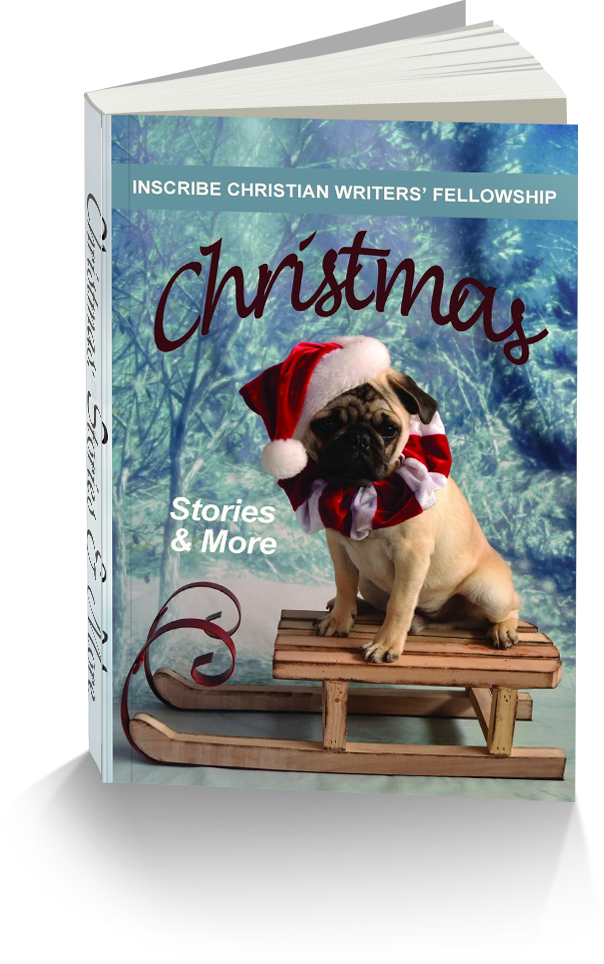
Speaking of resources, I'm delighted to have a children's story, Hope for Jimmy, in the newest InScribe anthology, Christmas: Stories & More. This book is a wonderful collection of stories, poems, dramas, recipes and more with contributions from 40 different Canadian authors. Purchase your own copy or buy them for presents!


I've enjoyed reading about other valuable resources shared by Christian writers this month. What is your favourite resource? Or which new resource are you going to try? I'd enjoy hearing about it in the comments.

Ruth L. Snyder


Creativity is my passion. My mission is helping other creative people achieve their goals. How can I help you? Follower of Jesus. Coach. President of ICWF.